Trump search inventory reveals new details from FBI seizure
Posted September 2, 2022 11:27 am.
Last Updated September 2, 2022 11:32 am.
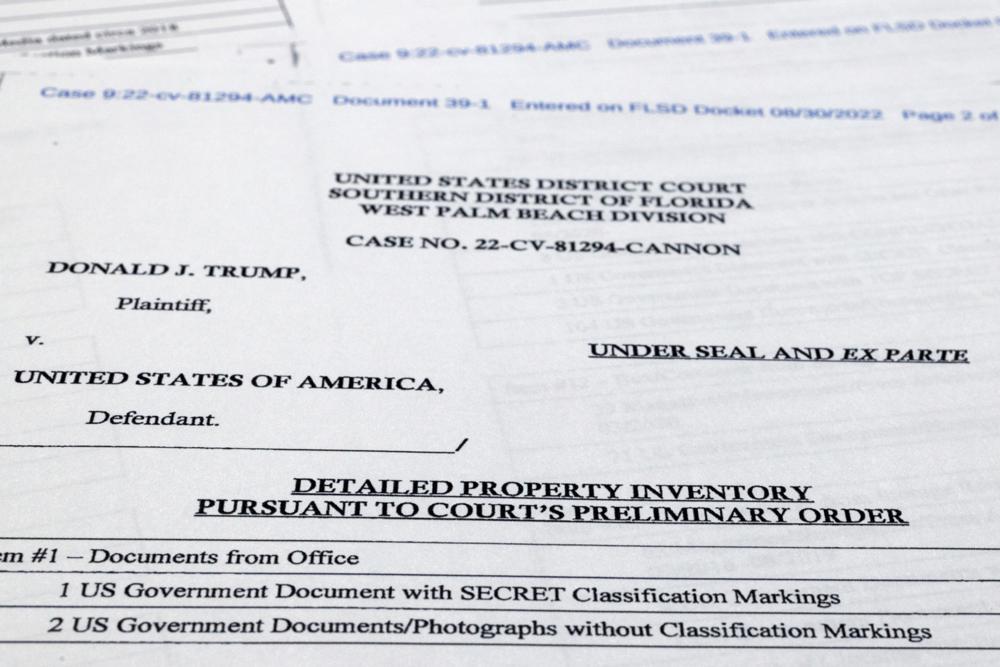
FBI agents who searched former President Donald Trump’s Florida home last month found top secret records in an office and storage room, along with folders with classified banners but nothing inside and more than 10,000 other government records with no classification markings, according to a more detailed inventory of the seized material made public on Friday.
The inventory compiled by the Justice Department reveals in general terms the contents of 33 boxes and containers taken from an office and a storage room at Mar-a-Lago during the Aug. 8 search.
Though the inventory does not describe the content of the documents, it shows the extent to which classified information — including material at the top-secret level — was stashed in boxes at the home and mixed among newspapers, magazines, clothing and other personal items.
It also makes clear for the first time the volume of unclassified government documents at the home even though presidential records were to have been turned over to the National Archives and Records Administration.
The Archives had tried unsuccessfully for months to secure their return from Trump and then contacted the FBI after locating classified information in a batch of 15 boxes it received in January.
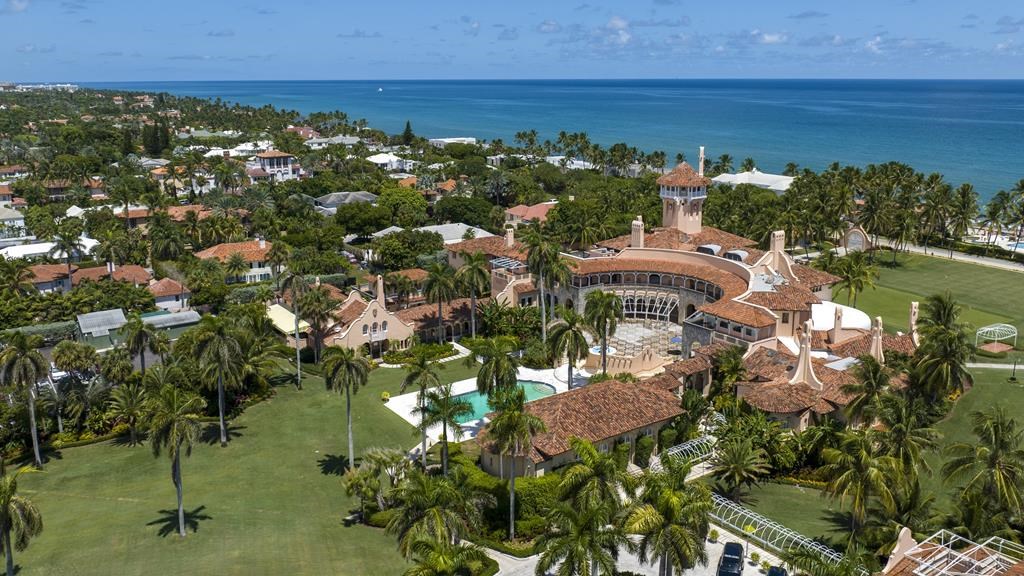
This photo shows an aerial view of former President Donald Trump’s Mar-a-Lago club in Palm Beach, Fla., Wednesday, Aug. 31, 2022. The Justice Department says classified documents were “likely concealed and removed” from former President Donald Trump’s Florida estate as part of an effort to obstruct the federal investigation into the discovery of the government records. (AP Photo/Steve Helber)
The Justice Department has said there was no secure space at Mar-a-Lago for sensitive government secrets, and has opened a criminal investigation focused on their retention there and on what it says were efforts in the past several months to obstruct the probe.
It is also investigating potential violations of a law that criminalizes the mutilation or concealment of government records, classified or not.
Lawyers for Trump did not immediately return an email seeking comment Friday. Trump spokesman Taylor Budowich asserted that the FBI search was a “SMASH AND GRAB” — though the Justice Department had received court-authorized permission to search specific locations in the home.
The inventory was released as the Justice Department undertakes its criminal investigation, as intelligence agencies assess any potential damage caused by mishandling of classified information and as a judge weighs whether to appoint a special master — essentially an outside legal expert — to review the records.
Related links:
-
President Biden warns Trump, allies threaten democracy
-
FBI affidavit shows concerns about documents at Trump estate
-
Trump seeks special master to review Mar-a-Lago documents
The inventory had been filed earlier under seal, but the Justice Department had said that given the “extraordinary circumstances,” it did not object to making it public.
Trump himself has previously called for the disclosure of documents related to the search. U.S. District Judge Aileen Cannon said on Thursday that she planned to unseal the inventory and did so on Friday.
All told, the inventory shows, the FBI seized more than 100 documents with classification markings in August, including 18 marked top secret, 54 secret and 31 confidential.
The FBI identified 184 documents marked as classified in 15 boxes recovered by the National Archives in January, and received additional classified documents during a June visit to Mar-a-Lago.
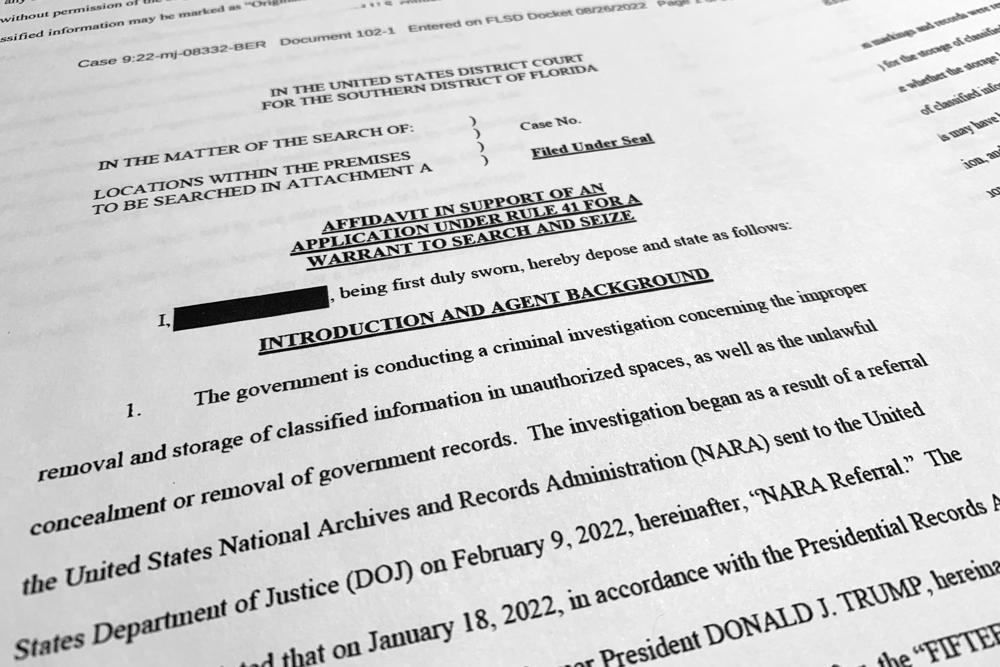
The affidavit by the FBI in support of obtaining a search warrant for former President Donald Trump’s Mar-a-Lago estate is photographed Friday, Aug. 26, 2022. U.S. Magistrate Judge Bruce Reinhart ordered the Justice Department to make public a redacted version of the affidavit it relied on when federal agents searched Trump’s estate to look for classified documents. (AP Photo/Jon Elswick)
The court filings have not offered an explanation for why Trump had kept the classified documents, and why he and his representatives did not give them when requested.
The inventory shows that 43 empty folders with classified banners were taken from a box or container at the office, along with an additional 28 empty folders labeled as “Return to Staff Secretary” or military aide. Empty folders of that nature were also found in a storage closet.
It is not clear from the inventory list what might have happened to any of the documents that apparently had been inside.
Separately Friday, the Justice Department said in a court filing that it had reviewed the records seized during the recent search and had segregated those with classified markings to ensure that they were being stored according to proper protocol and procedure.
“The seized materials will continue to be used to further the government’s investigation, and the investigative team will continue to use and evaluate the seized materials as it takes further investigative steps, such as through additional witness interviews and grand jury practice,” the department said.