Shipping vessels agree to slow down in B.C. waterways to protect whales
Posted June 3, 2025 10:54 am.
The Vancouver Port Authority says several shipping companies have agreed to slow down their vessels until November to protect an endangered whale species.
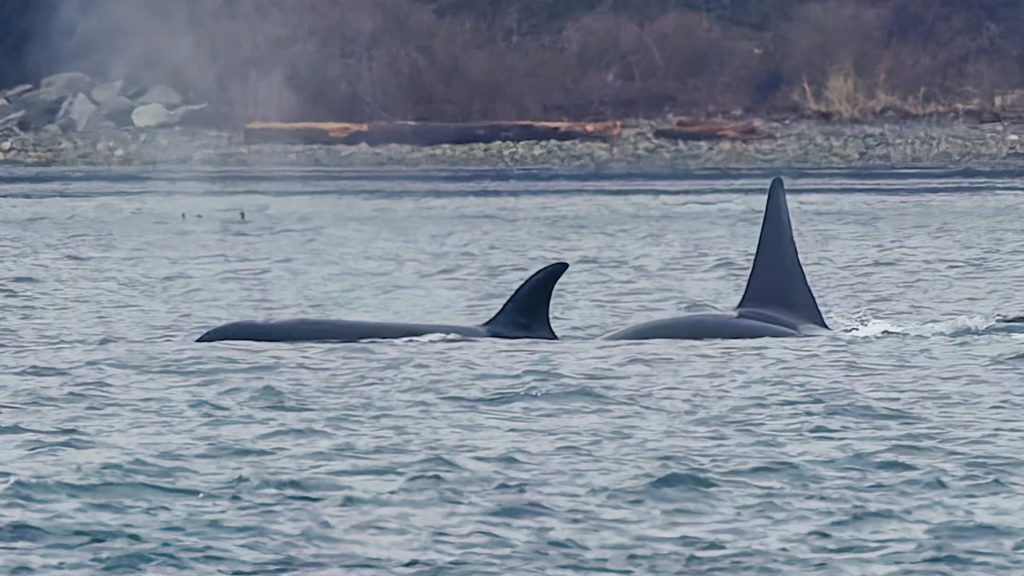
One of B.C.’s top natural attractions is whale watching on the west coast — looking out onto the horizon on a good, clear day and hoping to see a killer whale break the water.
But the whales share the water with many shipping vessels coming to the Port of Vancouver.
Melanie Knight with the authority’s Enhancing Cetacean Habitat and Observation (ECHO) program says the area, where 70 shipping companies have voluntarily agreed to slow down Monday, has been expanded into what’s called the Swiftsure Bank, just west of the Juan de Fuca Strait.
“It is one of the important areas we have voluntary vessel slow-downs in, which overlap with key areas where the southern resident killer whales like to forage, navigate, and play,” said Knight.
She says vessels will take about an extra hour of time to make it to the port as they slow down from June to November, when the southern resident killer whales use the waters the most.
“So ultimately, the goal here is that if we ask vessels to voluntarily slow down, we will reduce the underwater noise that emits from those vessels, and give the whales the opportunity for a quiet environment where they can find their food and find each other.”
UBC professor Andrew Trites says there are about 74 southern killer whales in the water, according to recent estimates. But he says hundreds of humpbacks and other transient killer whales may benefit from the reduced noise.
“So much of the conservation action is designed to save one population, but in many ways, the southern resident killer whales — they’re like the ambassadors of the Salish Sea — it is going to help others as well. And certainly, one of the biggest threats to all marine life is underwater noise, and vessels produce a lot of that noise,” said Trites.
Whales are harder to spot in Vancouver’s False Creek among boat traffic, but one ferry operator says if you do spot a whale, slowing down or stopping means better enjoying the sight and taking care of the wildlife, too.
Zachary Lambert, with 15 years of boating experience, says running a boat over a certain RPM will make noise that hurts the whales’ ears.
“But a lot of boaters — at least seasoned ones — they’ll slow their boat down or go to absolute zero as long as it’s safe to do so,” said Lambert.
“And if you’re going faster, you’re going to be spending way more money on your fuel than if you’re going around 10 knots. That’s usually a sweet spot for a lot of vessels.”
Trites says it’s great for the future of the Salish Sea that corporations are choosing to slow down their ships, but everyone in the water has a role in protecting the marine animals that have been swimming in these waters for generations.