From surplus to deficit: Fiscal record under Eby’s BC NDP under attack at leaders’ debate
Posted October 14, 2026 6:00 am.
Last Updated October 14, 2026 9:19 pm.
As British Columbia faces a record deficit, the fiscal record under the BC NDP government for the last four years came under fire during Wednesday night’s B.C. leaders’ debate — the only debate ahead of the Oct. 24 election.
NDP Leader David Eby was asked how his government turned a nearly $6 billion provincial budget surplus when he took office in late 2022 into a $13.8 billion deficit now.
Eby answered by pointing the finger at the previous BC Liberal government, saying it closed 250 schools and sold off the land.
“Those so-called balanced budgets were balanced on the back of British Columbians,” he argued, saying the work to balance the budget should never be at the detriment of those living in the province. “We’ll reduce wasteful administrative spending,” he later added.
Interim B.C. Conservative Leader Lorne Doerkson hit back at Eby, reminding him that British Columbia has been led by an NDP government since 2017.
“You continue to refer to a decade ago,” Doerkson said. “The reality is, Mr. Eby, is you’ve been running this province for a decade and nothing is better than it was years ago.”
Hours before the debate started, the NDP released the costings for its platform, showing a deficit of about $12 billion by 2028-29, down from that forecast of $13.8 billion this fiscal year. Those figures are built largely on $1 billion in new revenue from income tax increases on the “top 3.88 per cent.”
During the debate, Eby said the proposed tax on the province’s highest earners would lead to improving health care. “I’m asking those who have the most to pay a little bit more,” Eby said.
“You cannot to attack the residents of British Columbia through taxation,” Doerkson replied. “That is not going to solve the problems of British Columbia.”
Doerkson also accused Eby of wanting to tax far more British Columbians than simply the ultra-rich, and he repeatedly argued the best way to balance a budget is to “grow our economy.”
At one point, when the NDP leader tried to defend his record, Doerkson said: “Nobody believes you anymore, Mr. Eby.”

Meanwhile Green Party Leader Emily Lowan also attacked Eby’s plan for taxing income rather than wealth. She called the Greens’ plan to deal with the deficit “fully costed” and “credible.”
The Greens released their platform earlier Wednesday – the first party recognized in the legislature to do so.
It promises new initiatives in health care, education and other social services worth almost $9.3 billion per year over the next two fiscal years, with new revenue coming from a one-time tax on “excessive wealth.” The party says the new levy would raise $22.2 billion in its first year and total additional revenue would top out at $25.3 billion in 2027-28.
“We’ve launched a tax on B.C.’s ultra wealthy and mega corporations,” Lowan said at the debate. She said she was not worried money would leave the province as a result because “what we tend to see is the ultra-wealthy don’t tend to leave.”

The B.C. Conservatives have yet to release their figures — something Eby pointed out many times on Wednesday evening.
“The history is clear: when they have uncosted promises, they cut like crazy,” Eby said of the Conservatives. “We’ve seen this before in British Columbia.”
“Trust me when I say this, British Columbians will see a fulsome plan before they go to the polls,” Doerkson promised.
British Columbians got their only chance to see Eby, Doerkson and Lowan go head-to-head in a live, televised debate 10 days before they go to the polls. The event, hosted by the B.C. Broadcast Consortium, was moderated by Shachi Kurl, the president of the Angus Reid Institute.
‘Who will hold the next government accountable?’
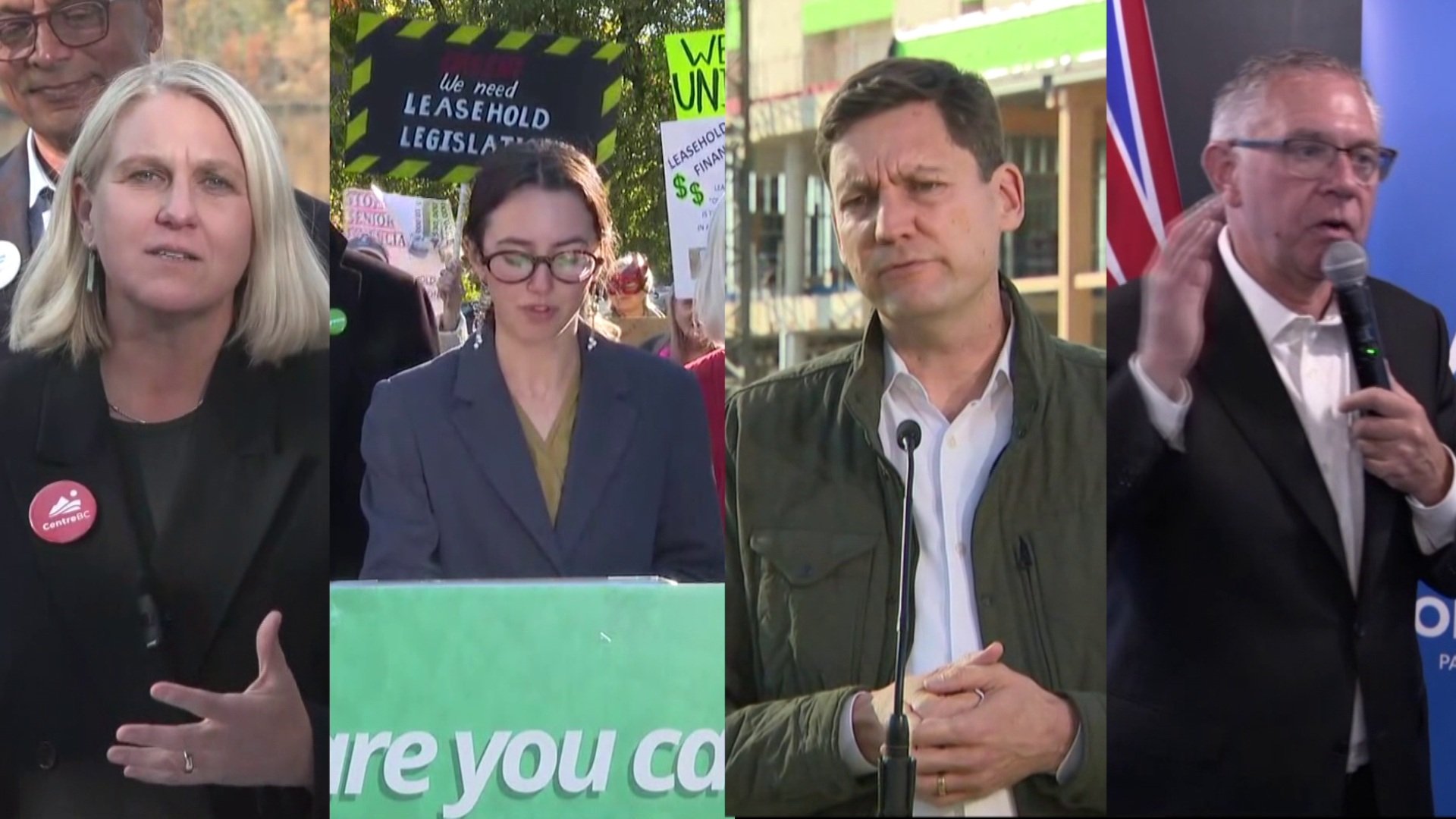
OneBC’s Dallas Brodie and CentreBC’s Elenore Sturko did not take part in the 105-minute debate, though both leaders were given a few seconds to address voters in pre-recorded messages near the end of it. Both are former B.C. Conservatives from different ends of its ideological spectrum.
Kurl explained OneBC and CentreBC were not running enough candidates to qualify for a spot on the debate stage.
Sturko said she was not asking British Columbians “to pretend that CentreBC will form government.”
“I’m asking them a different question. Who will hold the next government accountable? CentreBC is a socially progressive, environmentally pragmatic, and fiscally responsible party. Divisiveness and extremes on the left and on the right aren’t helping British Columbians,” she said.
Brodie said OneBC would push for a 25 per cent income tax cut for both individuals and corporations, and a two per cent cut in the PST.
“As well, we will fight against these land back giveaways that are being done by the current government. We will read the treaties and let you know what is going on. We will stop the greed and corruption of the reconciliation industry in British Columbia and put B.C. back in the hands of British Columbians,” she said.
Health care: public vs. private
On health care, Eby accused Doerkson and the Conservatives of wanting to facilitate a push towards a two-tiered health system, where public and private co-exist.
Doerkson rejected the charge. “I want a fully public system that everyone in this province can access,” he said. The Conservative leader went on to share his plan to bring more security to hospitals so that nurses feel safer.
READ MORE: NDP leader opposes private health care; BC Conservatives claim ‘fearmongering’
Lowan questioned the NDP’s own record on health care, saying Eby funneled public money to private contractors. She also said it is “staggering” that 1.2 million British Columbians do not have access to a family doctor.
“We’ve got to recruit more doctors,” Eby echoed.
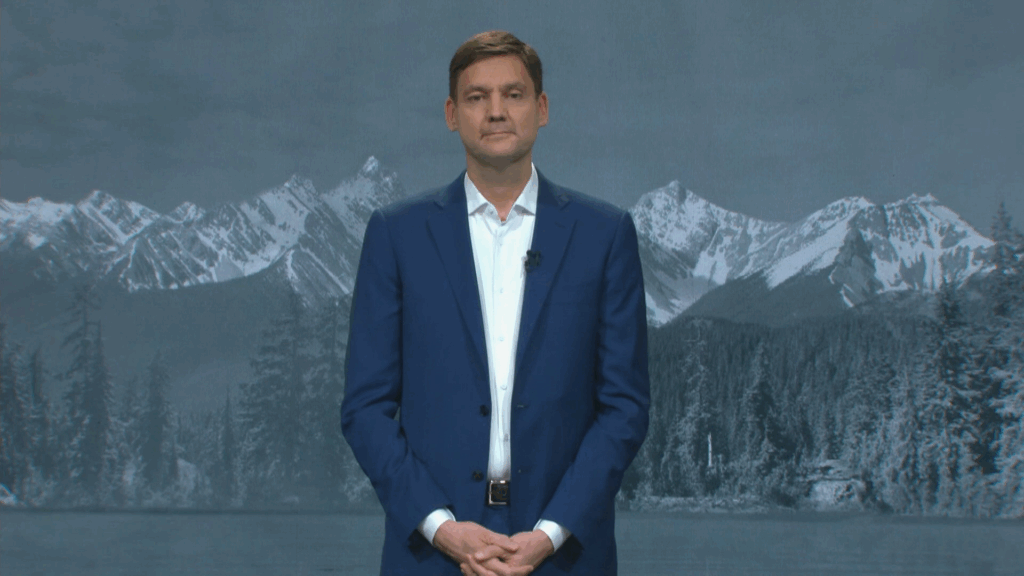
The party leaders agreed there are several problems impacting B.C.’s health system, such as emergency department closures, staffing shortages and a lack of family doctors.
The NDP leader reiterated that his new proposed tax on wealthier British Columbians would help fund some of those issues.
Housing: too much red tape?
On housing, Doerkson and Lowan agreed British Columbia’s youth feel priced out of the current real estate market.
“Buying a home, many in my generation can’t imagine that as a possibility,” the 26-year-old Green Party leader said. “We see home ownership as a lottery system.”
Doerkson argued the NDP created a “bureaucratic nightmare” for all builders, claiming some needed to wait an entire year for the proper permits to build a home.
The Conservative leader said removing some of that red tape would speed up timelines and lower costs. He also said there needs to be a better relationship between the province and its municipalities when it comes to housing.
Eby argued the Conservatives’ promise to remove some rules would actually increase red tape.
DRIPA ‘has to be repealed’: Doerkson
Major differences were revealed in all three leaders’ approaches toward the Declaration on the Rights of Indigenous Peoples Act (DRIPA). Kurl pointed to concerns about its impact, and fears over private property rights.
Eby said while there had been “challenging” court rulings in relation to Indigenous rights, and the government was appealing them, the only path forward was in partnership with Indigenous people.
“We cannot afford to have major projects tied up in the court,” he said, pointing to the need to work with Indigenous stakeholders.
Doerkson said he was committed to overturning the act, saying it had created division and “it has to be repealed.”
Lowan said the Greens took advice from First Nations leaders and they have been “unequivocal” about the need to implement DRIPA. When Doerkson said the province was “at odds” as a result of DRIPA, Lowan called his conclusion “ridiculous.”
Eby defends snap election: ‘I need a strong mandate’
B.C. is nearing the final leg of a four-and-a-half-week campaign that began when Eby called a snap election on Sept. 22 – a full two years before the next scheduled vote.
While Eby framed it as a necessary “existential moment” for a province weighed down by U.S. President Donald Trump’s trade war, his opponents have described it as an opportunistic move – one that would cost taxpayers millions of dollars.
Critics say Eby is gambling that it would be easier to win re-election in a climate marked by tumult among his main opponents. The BC New Democrats held a one-seat majority at dissolution.
In his opening remarks at the debate, Eby explained that having a one-seat majority meant “every vote can be contested.” He said sitting in legislature and being unable to deliver an agenda while being preoccupied with “surviving just another day” — arguing the Conservatives are repeatedly trying to “bring down the government” — is “not good enough.”
“I need a strong mandate,” Eby told debate viewers.
In his closing remarks, Doerkson called the snap election “cynical” because Eby “saw an opportunity for himself.”
The period of instability for the B.C. Conservatives began when several MLAs defected or were removed from caucus, leading to former leader John Rustad being forced out of that role last December.
The volatility continued when Kerry-Lynne Findlay took over — after several months under interim leader Trevor Halford – and tilted the party further towards the right. Her 113 days in charge saw 13 legislators exit the caucus in her final weeks as debate raged over the proper direction of the party. She quit Sept. 20 – two days before Eby called the snap election.
Findlay was replaced by Doerkson, who hurriedly returned from a trip to Africa and immediately brought several legislators back to the Conservative fold — including seven of eight who had joined the CentreBC party.
Under the Conservative Party of British Columbia’s constitution, an interim leader cannot run for the position permanently, but party directors have said they will pursue the “appropriate means” to keep Doerkson in power should he win this month’s election.
–With files from The Canadian Press