50 young coders cross Canada in quest to address environmental challenges
Posted July 23, 2024 10:37 am.
Fifty of the world’s most talented high school coders and hackers are setting off on a quest across Canada, to develop tech-driven solutions for environmental challenges.
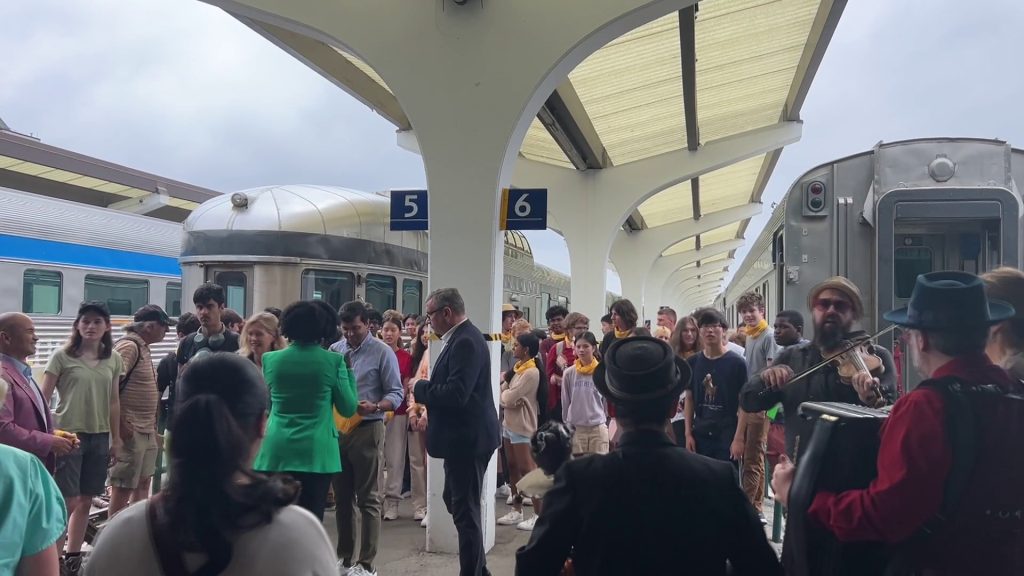
The young minds are part of Hack Club — a global non-profit network of high-school-student coding clubs who are travelling by train from Vancouver to Montreal over the course of four days on Via Rail’s The Canadian.
Hack Club founder Zack Latta says hackers on board the train will create algorithms and track patterns to find solutions to environmental issues that are inspired by the environment around them, like wildfires, pollution, and deforestation.
“No one can solve climate change in four days but what we can do is help inspire the next generation of technologists to choose this as a focus area that they spend their careers on,” he said.
Latta says he hopes this experience allows hack-clubbers to push their boundaries and experiment with new technology they have never used before.
“Coding is the ultimate act of self-expression — it’s like, literally, the ability to turn your ideas into something else that people can experience,” he explained.
One young hacker says she has been coding for over four years and is excited to meet other teenagers who share her passion for fighting climate change.
“Actually being able to bond with other hackers is something I’m looking forward to, the fact that we are actually all in-person for once,” she told CityNews.
The young innovators will travel through Canadian landscapes and remote wilderness, highlighting the importance of environmental stewardship and the ecological benefits of rail travel through their work.
“You will live the changes in the landscapes, starting with the magnificent mountains here in the Rockies, going across the Prairies, ending up in the metropolis of the country,” said Michael Acosta, chief commercial officer at Via Rail.
He explains the company is thrilled to be able to give young people the space to tackle some of the biggest global issues.
“If we could have more of these types of interactions we would be over the moon,” said Acosta.