Chilliwack freediver shows watery depths of B.C.’s big garbage problem
Posted February 7, 2022 9:18 am.
Last Updated February 8, 2022 11:48 pm.
Chilliwack’s Clayton Helkenberg is getting a lot of attention for his incredible videos of his freedives in B.C.’s lakes, rivers, and the ocean.
Freediving is similar to scuba but is done without an oxygen tank and therefore requires the freediver to hold their breath as they explore below the surface.
“I find it a lot more active as a sport. I find it a bit more rewarding. The peacefulness of being underwater with nothing but you, it’s pretty amazing,” the 27-year-old told CityNews.
Helkenberg is fairly new to the sport, having started it as a pandemic pastime in hopes of finding missing treasure in Cultus Lake.
He did find a few valuables but overwhelming the biggest thing he came across was trash.
Since then, he and his friends have been cleaning as they explore. Helkenberg documents his discoveries on his popular YouTube channel “Aquatic Monkey.”
“I found pretty much everything you can ever think of, from toilets to urns, found quite a few urns and ashes. For some reason the thing that sticks out to me most is a washing machine for your clothes, it was an older washing machine from the 50s… I have so many questions about why there is a washing machine in the middle of the lake.”
Over the weekend, Helkenberg was part of a large cleanup off Bowen Island, in partnership with Divers for Cleaner Lakes and Oceans and with permission from BC Ferries, in order to retrieve garbage near the terminal.
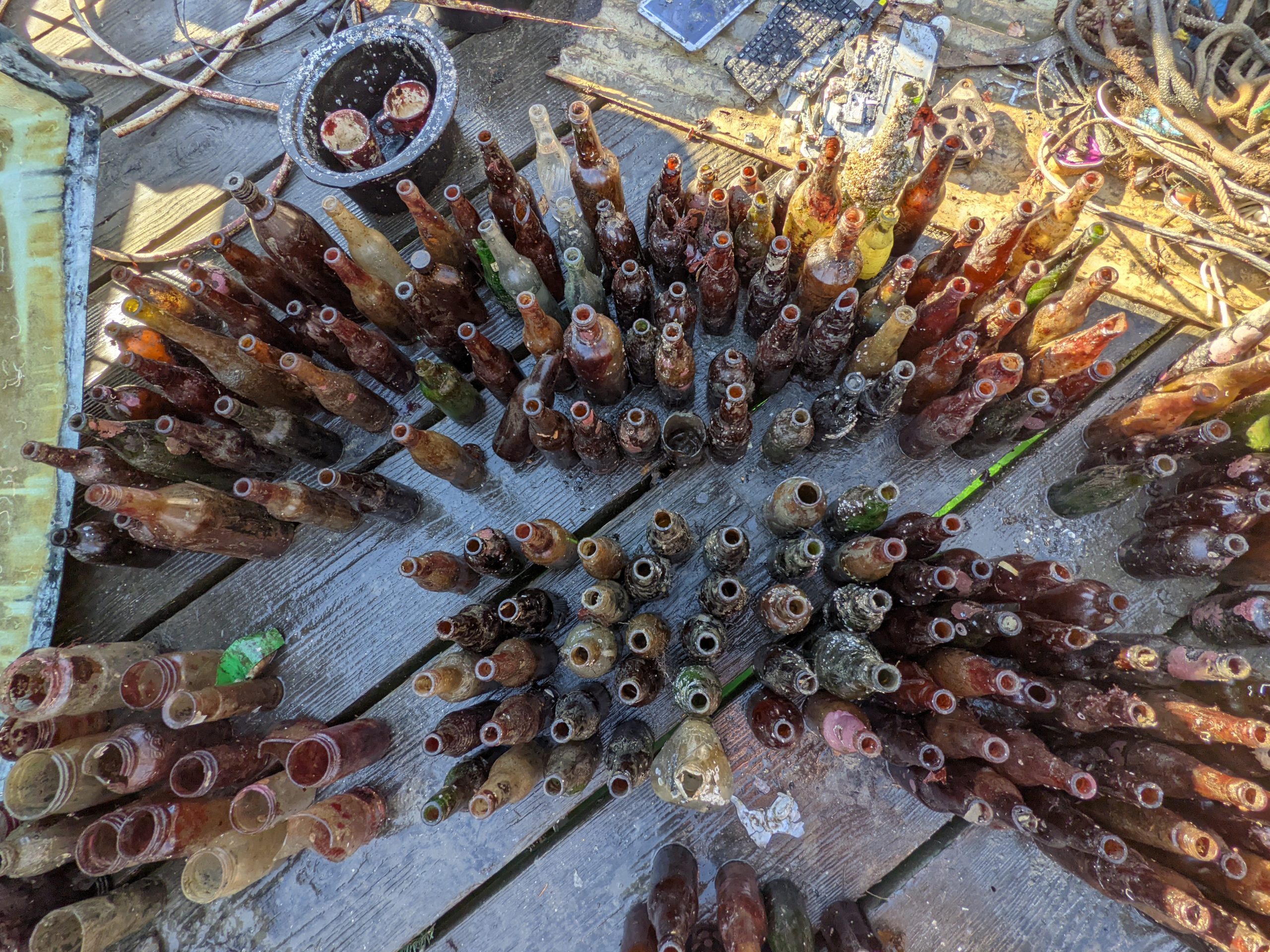


That garbage will be used for an upcoming art project called Diving In: The Art of Cleaning Lakes and Oceans.
“I think there is 13 or 14 artists that we have given fishing lures, paddles, cans, kind of whatever random stuff we have found from the bottom of the lake. We have given each of them these items to create some sort of art piece with,” he said.

A photo of garbage shared by
Diving In: The Art of Cleaning Lakes and Oceans as part of its upcoming project. (divinginbc.com)
Helkenberg knows the sport is dangerous and only ever freedives with a buddy and safety plans in place.
When there’s ice, he often breaks a hole in the surface in order to dive into frigid waters. He says he doesn’t get too cold since he moves around a lot, despite only wearing a thin wetsuit.
While he can dive up to 18 metres, about three times the depth of the deep end of a public pool, he typically stays closer to the surface as he needs to come up to breathe.
However, he doesn’t need to do that as often as most, as he can hold his breath for about three minutes.
“However, while actively diving you are using a lot more energy, you are using your muscles and the oxygen in your blood, so while I’m actively diving it’s closer to a minute, maybe a minute 20 is kind of my max. However, 99 per cent of the time I’m not going to push myself to that because I want to be comfortable,” he said. “Generally, I’m not under water for more than 40 seconds at a time.”
Helkenberg says despite the dangers associated with freediving, he feels no fear when he’s in the water.
“One of the things I love about freediving is when you go down underneath the water you have to be mentally there. If you are thinking about other stuff, your breath-hold isn’t going to be not as great. It’s totally peaceful, it’s totally silent underwater — unless you’re diving with seals and sea lions.”
While he gets a lot of views on his social media accounts, Helkenberg is not alone in the efforts to clean up B.C.’s lakes. He also partners up with other underwater environmental enthusiasts to try to bring more awareness to a greater audience.
Among them, Henry Wang, who is part of the Divers for Cleaner Lakes project, as well as Chris Sampson, a leader in the freediving community who organized a large cleanup at the end of January off Nanaimo.
Together, they are hoping people get the message about the effects pollution is having on B.C.’s iconic waterways, and think twice before they discard their waste improperly.