Knot theory: Those terrible tangled headphones!
Posted June 19, 2014 9:22 am.
This article is more than 5 years old.
VANCOUVER (NEWS1130) – There are a few sure things in life, such as death, taxes, and the irritating tangle your headphones get into when you put them in your pocket.
It can happen in seconds, confounding even the most confident fingers trying to untie knot after knot.
A study has actually identified 120 different types of knots that happen inside your pockets and, in over 3,400 different trials, found that the probability of a knot being formed is incredibly high, with most happening within seconds!
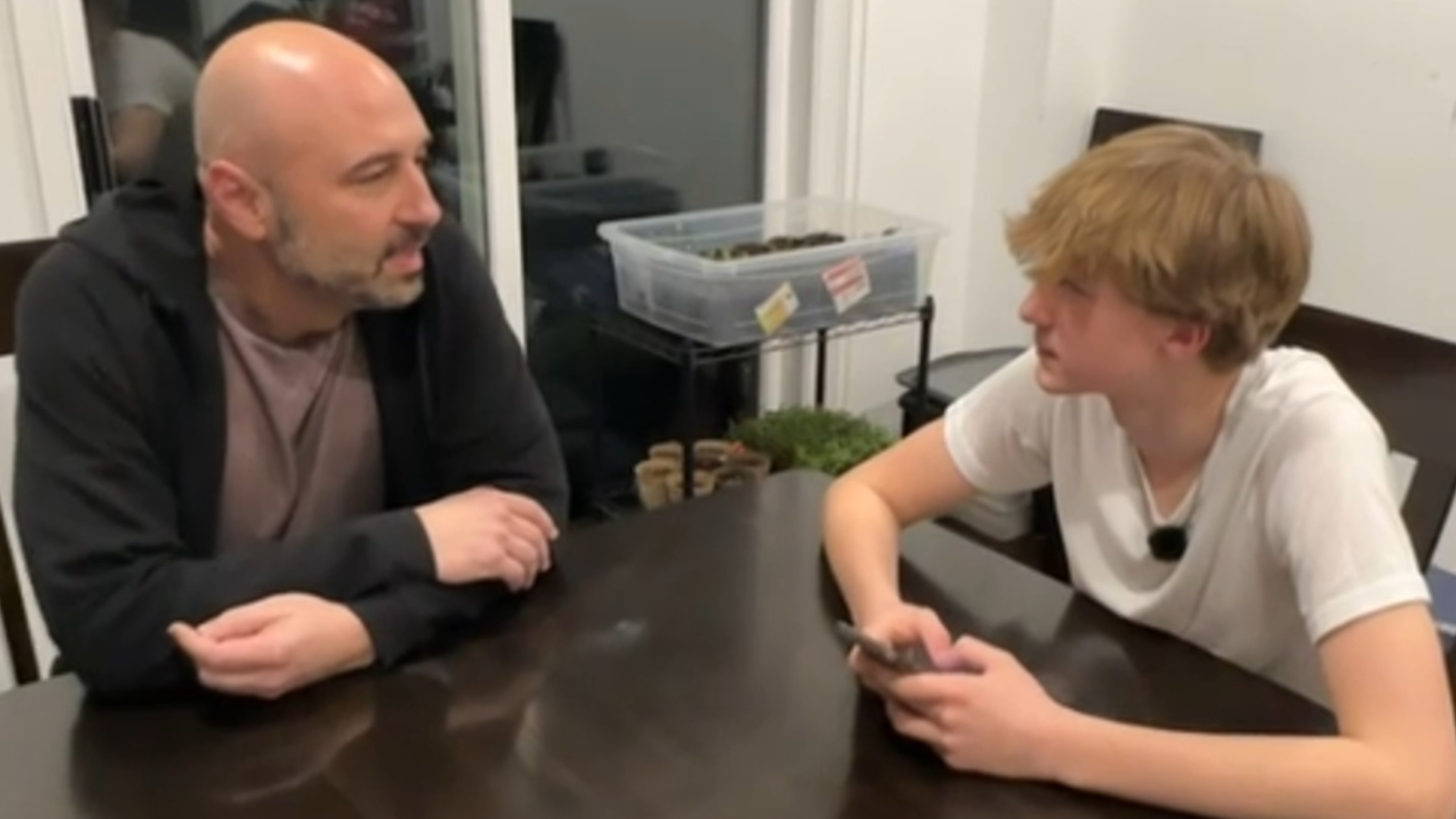
Since the probability “P,” mathematical self-avoiding random walks, finite agitation time, Möbius energy and Jones polynomials in Euclidian space fall a little outside the average radio reporter’s job description, we tracked down Professor Dale Rolfsen in the mathematics department at UBC, a respected knot theory expert, to “dumb it down” a little.
“Knot theory is this beautiful, visual, concrete thing that, surprisingly, has a lot of interesting math associated with it,” the good professor tells News1130. “I think there are something like 6 million prime knots that have 16 or fewer crossings. It’s pretty amazing.”
Rolfsen usually applies his expertise in knot theory to the study of polymers or DNA strands, which can end up in knots as well, but he is also known to tie a mean stevedore or halyard hitch while out on his sailboat.
“They’ve used knot theory to try to understand how various enzymes work on these strands of DNA, so it’s not just earphone cords that get tangled,” he explains. “It’s not easy to discuss it theoretically, but anyone who’s gone fishing knows the phenomenon: the backlash on the reel when you take your thumb off it at the wrong time. It gets horribly tangled and very difficult to get it straightened out.”
So using high-level knot theory and mathematics, is there a secret to untangling the complicated webs we weave in our pockets?
“Just start at one end and feed it through itself,” Rolfsen laughs. “It’s a sure-fire way to un-knot it. But it may not be the quickest way.”
Thanks, math. What would we do without you?