‘We are left with ashes and sadness’: B.C. First Nation shaken after wildfire
Posted August 6, 2021 1:12 pm.
Last Updated August 7, 2021 2:00 pm.
SPENCES BRIDGE (NEWS 1130) — A small First Nation community in B.C. is still standing after a wildfire came alarmingly close, but the last few weeks have taken their toll.
For two weeks, members of the Cook’s Ferry Indian Band were forced out of their homes as a wildfire grew dangerously close to their land.
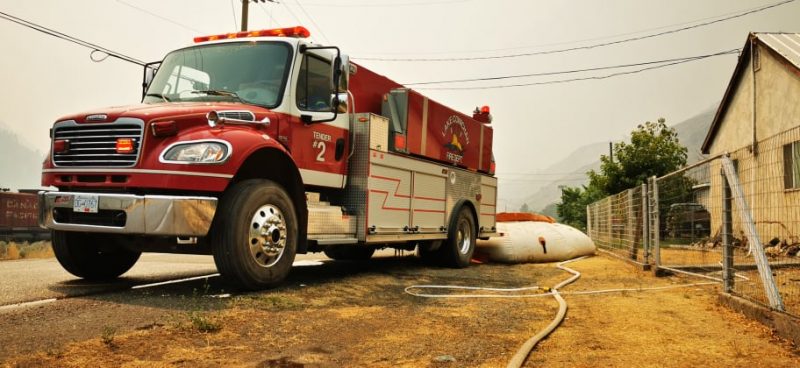
The fire that destroyed Lytton had grown, and it loomed over the small community of Spences Bridge, along the Trans Canada Highway. The Lytton Creek wildfire prompted the small community of Spences Bridge, and the nearby First Nation, to flee on July 22.
The Chief of the Cook’s Ferry Indian Band says she knew the fire would be disastrous if it reached them.
“[The] bright and aggressive flames appeared unforgiving and destined to overtake the town, only to taper off to slow crawling flames that appeared to take forever to arrive at their destination,” said Chief Christine Minnabarriet as she recounts seeing the fire first hand.
Courtesy Lyle Samaha
The threat was made even more terrifying as the First Nation had been housing evacuees from the Nicomen Indian Band, east of Lytton, in recent weeks.
As Nlaka’pamux people, they share family ties, language, and culture with the Lytton First Nation.
“We all have family directly impacted by the devastation of the fire that rolled through…countless family members and friends [are] without homes or belongings,” Minnabarriet said.
The situation became eerily similar, as ash began falling from the sky, coating the community.
As the winds picked up and temperatures remained scorching, the Lytton Creek Wildfire moved along Highway 12 and Highway 1, threatening communities on the outskirts.
“Suddenly, the distance between Lytton and Spences Bridge had vanished and danger seeming imminent, having been warned the fire could be as close as 13 km away. Many spent time packing what they could and left the area,” Minnabarriet said.

BC Wildfire Service deployed helicopters, crews to the area near Spences Bridge as the Lytton Creek Wildfire encroached. Courtesy Lyle Samaha
Related Articles:
-
B.C. wildfire closes Highway 97 between Vernon and Kamloops, destroys homes
-
B.C. has issued over 100 fire-related fines so far this season
-
Lytton wildfire caused estimated $78 million in insured damage: IBC
She says her community faced what is often the case for many First Nation communities.
“Our reserves are small and independent from each other, often ‘sprinkled’ among regional district properties,” she said that has made more challenging to communicate during an emergency.
Spences Bridge does not have a mayor, and there is confusion concerning jurisdiction and authority.
Often, that means one part of the community responds one way, and the other in another way.
Minnabarriet says, overall, the band and the town were able to work together for the most part, but the relationship needs to build in the days, weeks, and years ahead.
By the time the evacuation was ordered, the summer had already been incredibly nerve-wracking.
Throughout the first weeks of July, following a record-breaking heatwave in the province, her community was placed on and off evacuation alerts several times.
Then a new threat, the Tremont Creek wildfire, threatened reserves on the east side of the Thompson River.
The threats were coming from multiple directions and as the fire swept across the mountain, most of the community fled, not to see their homes again until Aug. 3.
They remained standing, thanks in large part to the efforts of firefighters. Structural protection and back burns were used to protect the community, and no structures were lost.
Watch: Firefighters use controlled burns to prevent Lytton Creek wildfire spread
Video of those controlled burns show a shocking scene, with fiery embers just steps away from the community.
Spences Bridge Fire Department volunteer Lyle Samaha was able to film the scene throughout the firefight, metres away from the flames.
He was safe, and there were no injuries reported.

Courtesy Lyle Samaha
Inaccurate posts of rumours or devastation on social media, only added to the grief.
“[The posts] fuels fears, creating angst and frustration for community members,” Minnabarriet said.
To combat this, Cook’s Ferry ended up using social media to post factual information, which members read as far away as Langley, where they stayed during their evacuation.
She, like members of the Lytton community, is asking for more accountability for railway companies, which continued to operate throughout the wildfire fight.
At one point, Minnabarriet says the heavy helicopters were about to leave when a pile of rail ties caught fire next to the tracks. Crews were able to knock it down, but she says it happened just across the street from homes on Highway 8.
Read more: TSB investigating whether train sparked Lytton wildfire
She would also like to see longterm support for the indigenous community, which has faced low salmon runs in recent years and expects further threats caused by climate change.
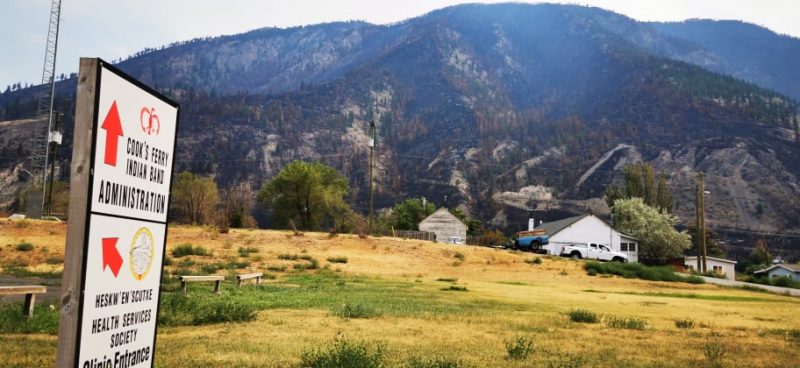
“These fires have raged on, creating immeasurable impacts on the land, affecting our culture, our harvesting, habitat for animals, and range tenures which are the livelihood of many of our people. Fire behaviour and fire fighting has changed significantly over the decades and with it, we lose these values of the land as fire rages on,” she said.
Other wildfire-impacted First Nations are echoing those concerns, and the importance of cultural burning to prevent wildfire spread.
“As caretakers of the land who sustained the land through cultural burning to maintain the environment, we see this as avoidable had we been allowed to continue our practices,” Minnabarriet said. “Now we are left with ashes and sadness.”