B.C. First Nations call for better alert system, more funding after slow flood response
Posted December 9, 2021 1:57 pm.
Last Updated December 10, 2021 9:46 pm.
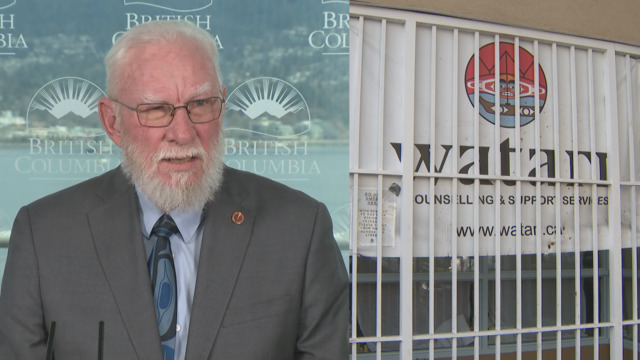
The executive director of the First Nations Emergency Management Society is calling for a more integrated alert system and funding after it took days to co-ordinate and reach remote Indigenous communities cut off by recent devastating floods in British Columbia.
Wayne Schnitzler said the implementation would streamline communication and emergency response between the agency and its provincial and federal partners, and better prepare remote communities for disaster.
Up to 42 First Nation communities were affected by the last month’s floods, but because the society is not heavily funded by Indigenous Services Canada until a disaster occurs, he said it leaves them scrambling to organize and respond.
Schnitzler said it took days to get organized enough to start helping isolated communities with resources and supplies.
Related Articles:
-
Coquihalla Highway could reopen early January, ahead of previous schedule
-
Floods destroyed Highway 8 near Spences Bridge, dozens homeless

Highway 8 is washed away between Merritt, and Spences Bridge on December 3rd, 2021. (B.C. Ministry of Transportation Image)
“We’re working on getting more funding so we can have better capacity to deal with these issues ourselves,” Schnitzler said. “It’s difficult to put together a team in the middle of an emergency.”
This comes as Emergency Management B.C. warns of another strong storm coming for several parts of B.C. starting Friday. It predicts snow in parts of the Interior and mountain passes, up to 60 millimetres of rain for the Lower Mainland and high winds across much of the province.
The government said in the statement the weather “may pose further challenges in areas recovering from November’s storms.”
Transportation Minister Rob Fleming said in a news conference Thursday that B.C.’s Coquihalla Highway could reopen sooner than expected if the weather co-operates.
“We are confident it could instead reopen in early January. This is remarkable given the scale of damage on the Coquihalla,” Fleming said.
The highway, which connects the Lower Mainland to the Interior and is a major trucking route, had more than 130 kilometres of roadway damage and five bridges washed away.
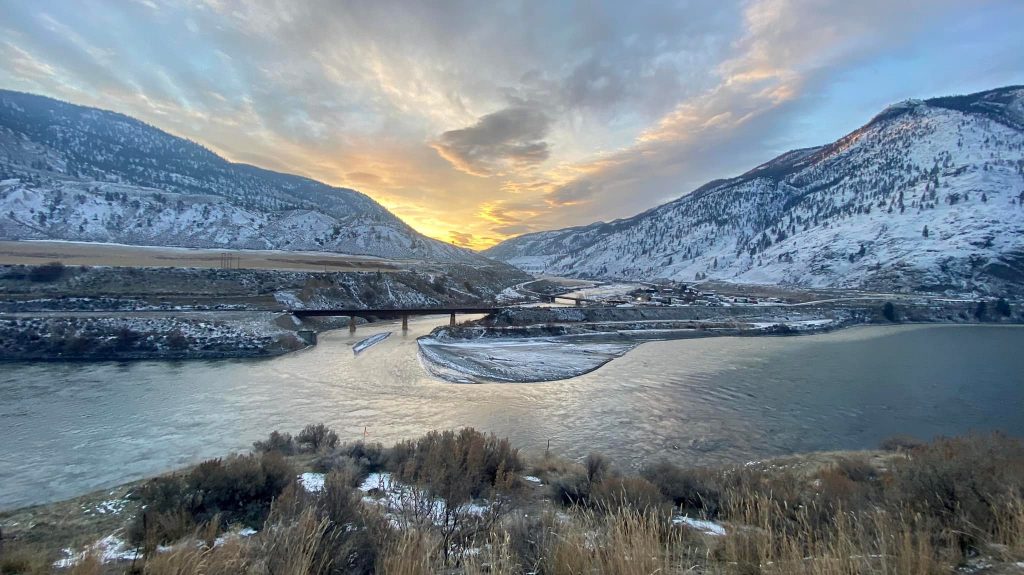
A photo of the mouth of the Nicola River in B.C. as residents continue to deal with high water levels and flood damage due to recent atmospheric rivers. Dec. 10, 2021. (Courtesy: David Walkem/Facebook)
But many have urged the government to make more progress on key routes which connect several Indigenous communities, such as the Cook’s Ferry Indian Band in Spences Bridge which has been cut off due damage on Highway 8 and Highway 1.
Assembly of First Nations National Chief RoseAnne Archibald was able to see those areas first hand on Thursday.
1/ Meegwetch Ministers @mikefarnworthbc @MurrayRankinNDP for inviting me to witness the devastating #floods #landslides have had on #FirstNations in the Nicola Valley pic.twitter.com/VBjBY4cgh5
— RoseAnne Archibald (@ChiefRoseAnne) December 10, 2021
“The biggest thing that impacted me today was really the large scale devastation along Highway 8. The other thing that was really emotional was listening to the chiefs about how this is impacting their community,” Archibald said.
On Nov. 22, Indigenous Services Canada announced $4.4 million in funding to Emergency Management Society to assist in flood response, but critics say that money needs to be there on a long-term basis, and not only after something has already happened.
The province signed a $29 million Emergency Services Agreement with Indigenous Services Canada in 2018 to provide emergency help to First Nations in B.C. through Emergency Management B.C. They said this included 28 emergency management coordinator positions for First Nations, which have not yet been filled.
Indigenous Services Canada did not immediately respond to requests for comment.
Archibald echoed the calls to have more long term plans to assist these communities, as many of them are still dealing with the aftermath of several years of record-breaking wildfire seasons.
Read more: ‘We are left with ashes and sadness’: B.C. First Nation shaken after wildfire
The Cook’s Ferry Band was among the communities forced out of their homes due to the threat of a wildfire. Once home, the community continued to face the lasting effects of the wildfire as many ranchers were left without feed for their animals.
Watch Related:
“First Nations Emergency Support Services need to be properly funded moving forward. They need long term funding agreements. There’s a real disparity and a real disproportionate and negative impact on First Nations when it comes to climate change,” she said.