‘I look great in my underwear’: Vancouver model reacts to negative feedback
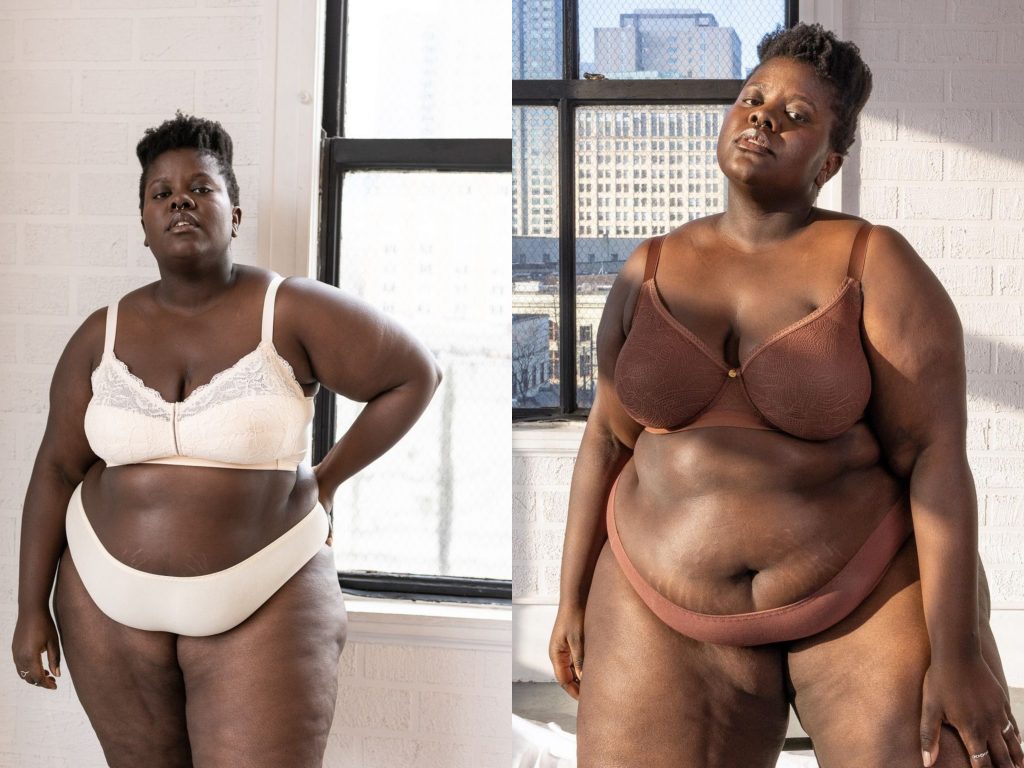
Posted May 15, 2022 3:56 pm.
Last Updated May 15, 2022 9:04 pm.
A Vancouver model recently featured in a B.C. and Ontario-wide underwear ad is speaking of their experience, including some vitriolic feedback the campaign received.
Lydia Okello, a Black plus-size model, says this is the reality of marketing campaigns that feature people “who sit outside of what we assume is beautiful in society.”
While waiting for your train or bus recently, you may have seen Okello posing for a Vancouver-based undergarment company called Understance.
The four-week campaign launched March 21 and was displayed in B.C. and Ontario.
The ad received a large amount of positive feedback and marked a milestone in Okello’s career, they say. But Okello adds, they were frustrated to hear criticism from a Mississauga councillor.
Jiayi Lyu, the founder and director of the underwear company, explains a few weeks ago she was made aware of complaints made by councillor Sue McFadden and Mississauga residents. Understance says the complaints claimed the ads were “offensive to women” due to “nudity.”
McFadden called for a review of the campaign ads but told The Toronto Star it was not because of the size and race of the models photographed in the ad.
However, Okello argues, “it felt pretty transparent, where the criticism actually stems from.”
“I’ve been doing this type of work for four years, and I’ve been posting myself on the internet for much longer than that. To hear her specific wording in her criticism, I felt like it was coded as a moral issue,” they said.
“Personally I do not see the same energy towards underwear ads with thin white models. To me, it came across as quite easily digested as something more than feeling incensed by an underwear ad. From where I’m standing, it felt far more, both racially motivated and motivated by fatphobia, because I’m a fat Black model and I was in my underwear on a bus shelter and it was very clear that that was something that she found to be ‘offensive.'”
@styleisstyle1 love to simply exist and be told my body is, and I quote, “offensive to black women”… #behindthescenes #bodyneutrality #plussizemodel ♬ Lo-fi hip hop – BADMYTH
Lyu argues McFadden’s and the Mississauga residents’ complaints around nudity were unfair as “we’ve all seen underwear ads before.”
“We’re a bra and underwear retailer. So the only way for us to showcase our products is to display them and … there is nothing sexually suggestive about our ads,” she said.
Lyu says McFadden did not bring her complaints up to the company.
CityNews reached out to McFadden for comment but she declined to provide one.
. @styleisstyle says it doesn't go unnoticed how models that fit Eurocentric beauty ideals face less criticism when involved in ads.
“People who have marginalized bodies, people who are minorities … there seems to be a very loud & strong & oftentimes, honestly, cruel feedback." https://t.co/ldxdcrpyiC— Nikitha Martins (@nikitha_martins) May 16, 2022
This is not the first time Understance has displayed plus-size models in its ads, which is why the founder of the company adds the complaints were no surprise.
“As a brand, we get Facebook comments, Instagram comments, emails, even written letters about the models that we’ve used. And they are almost always about plus-size models. So, I think in a way this was a response that we were not hoping for. But we had, to some degree, anticipated.”
Okello says they didn’t notice a stark amount of negative feedback after the ad received criticism, but they say it does not go unnoticed how thin, white models that fit into Eurocentric beauty ideals face less criticism when involved in advertisements.
“People who have marginalized bodies, people who are minorities, whether that is in race, ability, size, generally there’s a very strong pushback, particularly for I would say, underwear swimwear. When there are marketing campaigns that have folks who represent those identities, or maybe challenge what generalized society has held as beautiful. There seems to be a very loud and strong and oftentimes, honestly, cruel feedback about that marketing,” they explained.
“For me, perhaps also because I inhabit some of those identities, it feels there’s just a very strong contrast between a brand posting a picture on Instagram of a thin white person in a swimsuit, versus a brand posting an Instagram of a fat Black person, or a person who’s a wheelchair user or someone even who has maybe visible piercings or tattoos, things as simple as that.”
This feedback reflects a societal ideal, Okello says and it reflects how far there is to go to make people respect and feel comfortable with how someone else chooses to present their body.
“I’ve noticed more and more that there seem to be specific bodies are up for criticism and discussion versus others.”
View this post on Instagram
Lyu says she believes advertising can have an impactful effect on self-image, which is why the company chooses to advertise with models that resemble the consumer.
“One thing that’s come up somewhat consistently is will say ‘you’re promoting obesity,’ or ‘you’re promoting unhealthy lifestyles.’ To that we say, health is a very personal thing, and you should never make assumptions about someone’s health based on their appearance alone.
“As a brand, we’re not here to judge. We simply create bras and underwear for people who wear them.”
In Okello’s experience, they say their journey to accepting their own body was strongly influenced by seeing diverse bodies displayed in media and interacting with people who just looked different.
“I think that it may seem quite simple to someone who doesn’t identify as fat or deal with that phobia on a daily basis or struggle with body image in that specific way. But a lot of the feedback that I received — the positive feedback that I received — was folks saying that they were just happy to see somebody who looked like them and happy to see a familiar body presented as normal,” they say.
“Because of the way that fatphobia operates in our society, and because it is kind of the default, it is important to just see that there are lots of different ways bodies look, even if we hadn’t seen them before. These body types exist and to have them in public, to me, is uplifting and is affirming.”
Many steps need to be taken to combat fatphobia, Okello says, but having visual representations of large bodies more commonly is one way they say people can find acceptance and understanding.
“As an editorial note, I think I look great in my underwear. So I’m puzzled by the councilwoman’s objections because personally, I think it’s a really beautiful ad,” Okello added.