B.C. wildfire risk expected to ramp up this month
Posted July 7, 2022 1:38 pm.
Last Updated July 7, 2022 1:44 pm.
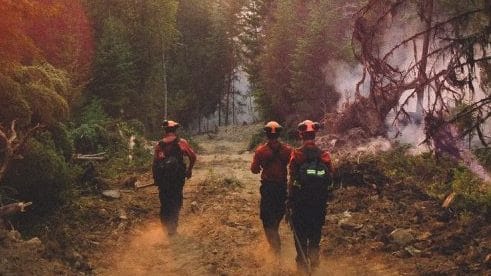
The cool spring has kept the B.C. wildfire risk low, but that could change quickly due to hotter weather later this month and a little more lightning than usual.
Matt MacDonald, lead forecaster with the BC Wildfire Service, says June was wetter and cooler than usual in the southern half of the province. That means wildfire activity is currently “minimal and concentrated in the northern half of the province.”
“In the northwest corner of the province, down through the Peace (region) and towards Prince George is where we saw the real warmth this June,” MacDonald explained.
“The southern half of the province was quite showery … down along the South Coast, in through the Okanagan, and then definitely up towards Northern Cariboo. That really helped recharge those drought anomalies that we were seeing earlier in the season.”
Read more: B.C.’s cooler, wetter June keeps early summer wildfire hazard low: BCWS
He warns B.C. has seen little more lightning than usual this season.
“This June across the province, we recorded just over 60,000 lightning strikes. That was just a bit higher than our historical 20-year average of 59,000 lightning strikes. So a fair amount of lightning across the province,” MacDonald said.
However, MacDonald says we only saw 30 lightning-caused fires, compared to the 110 that are usually sparked in June.
About 60 per cent of wildfires in B.C. are started by lightning.
MacDonald says wildfire season could ramp up in the coming weeks, with much warmer and drier weather expected in July.
“As we get into the latter half of July, not only will we see these summer-like temperatures finally materialize, but they will likely be warmer than normal — likely by the tune of a degree or two — which, over a 30-day period, is definitely noteworthy.”
Related articles:
-
One year after Lytton disaster, B.C. residents are ‘very concerned about wildfires’, poll says
-
After the heat dome, finding out if B.C. can better handle emergencies in the future
Around this time last year, B.C. was coming out of a deadly heat dome, though temperatures remained high and conditions were dry across the province.
“All we needed was three consecutive days of warmth, a little bit of wind and low relative humidities, and you can see just how quickly those fuels become receptive to ignition,” MacDonald said.
He says about a third of the province is expected to have drier than normal conditions in late July to early August this year. However, it’s hard to say how much rain will fall.
“During the summer months, a lot of our precipitation comes from small-scale thunderstorms … that’s simply impossible to forecast beyond a two to three-day period.”
MacDonald expects a return to seasonal temperatures near the end of August and into December.