Vancouver’s retail rebound shows resilience, though recovery uneven
Posted July 11, 2022 4:39 pm.
Last Updated July 11, 2022 4:57 pm.
This pandemic period has stretched many businesses to the brink, and some over it.
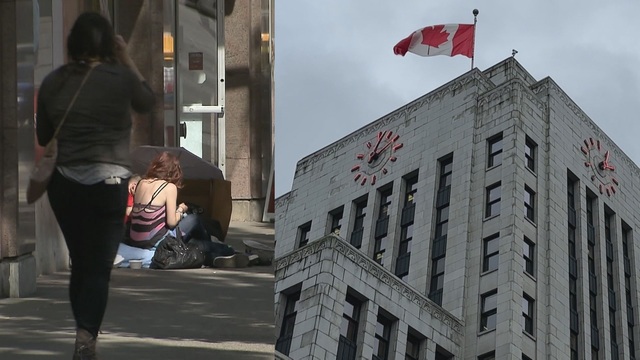
And while Metro Vancouver’s retail rebound has been impressive, there are still areas where empty storefronts are still very much part of the picture.
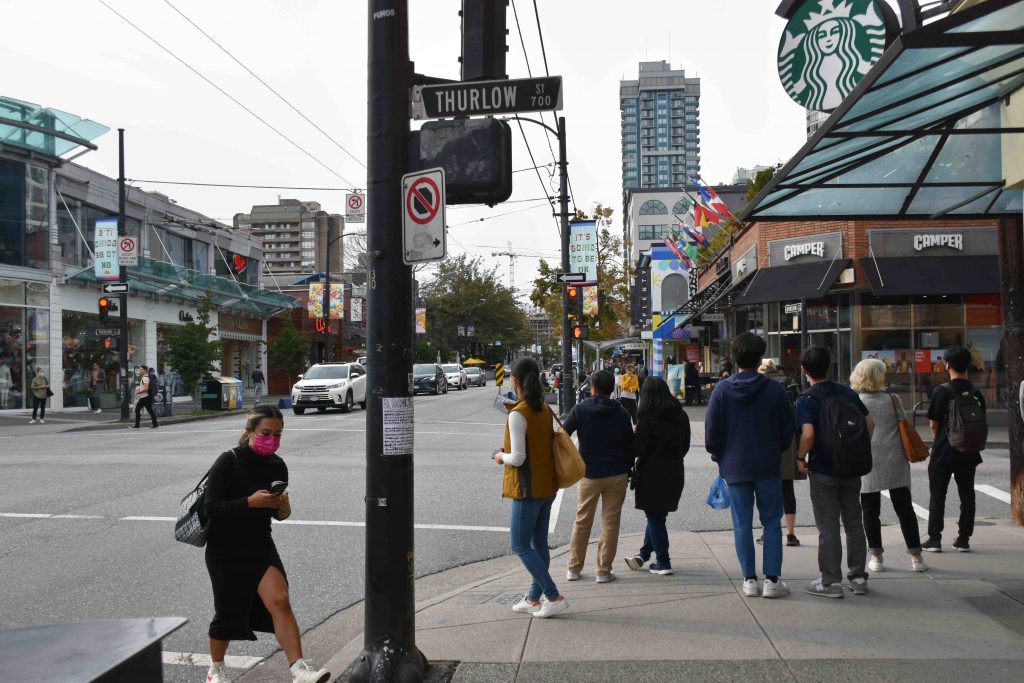
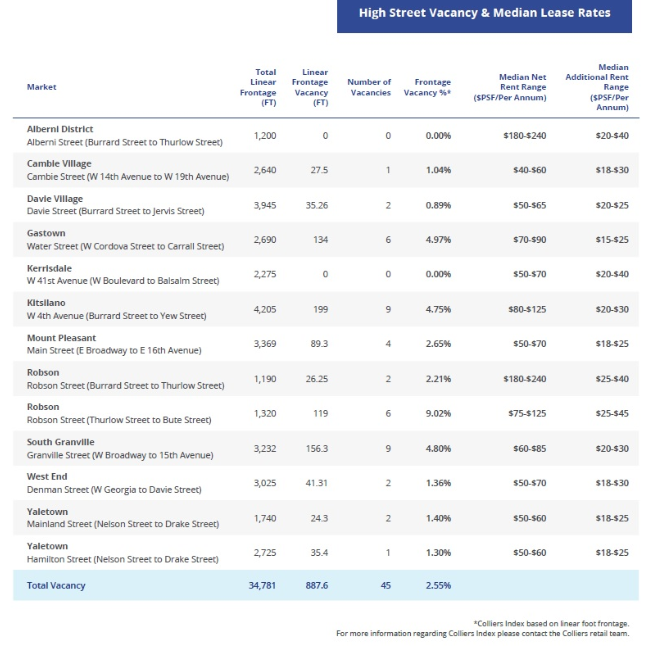
In places like parts of Robson Street, for example, nearly one in 10 storefronts sits empty, according to a report from real estate firm Colliers.
There are other areas like Chinatown and Gastown, where vacancy levels are around 5 per cent, which are struggling as well.
(Image credit: Colliers)
“That can be explained in a couple of ways,” Madeleine Nicholls, a senior managing director with Colliers told CityNews in an interview. “The uneven recovery of back to the office in the [Central Business District], that certainly affected how the retail there has responded. And, the foot traffic driven by tourism has affected Gastown, and in some cases Chinatown as well.”
But while some storefronts sit empty, Nicholls is optimistic the recovery will continue.
“It will sort itself out, driven by footfall, and there will be a very organic return of retail once the footfall increases,” Nicholls said. “The areas that have really fared well have been the residentially dense areas, such as Mount Pleasant for example.”
But beyond a gradual organic recovery, the Downtown Vancouver Business Improvement Association believes local government can do more.
“We’ll see some organic elements of our recovery, more people returning to those spaces,” DVBIA president and chief executive Nolan Marshall told CityNews in an interview.
“But we certainly need help from the government to make sure the spaces themselves are clean, that the people feel safe, both visitors and potential customers, as well as workers working in retail. That’s something that we could use a lot of help with, from local government and also from the Vancouver Police Department, just having a presence in the community makes people feel safe.”
“What we know in retail, it’s all about an experience. You can buy anything you want to buy from the comfort of your couch, but you can’t have the experience of coming downtown, of going to an area, buying something and also having a good meal, of seeing something interesting, of hearing some music. You can only get that when you leave your house and you come downtown.”
(Image credit: Colliers)
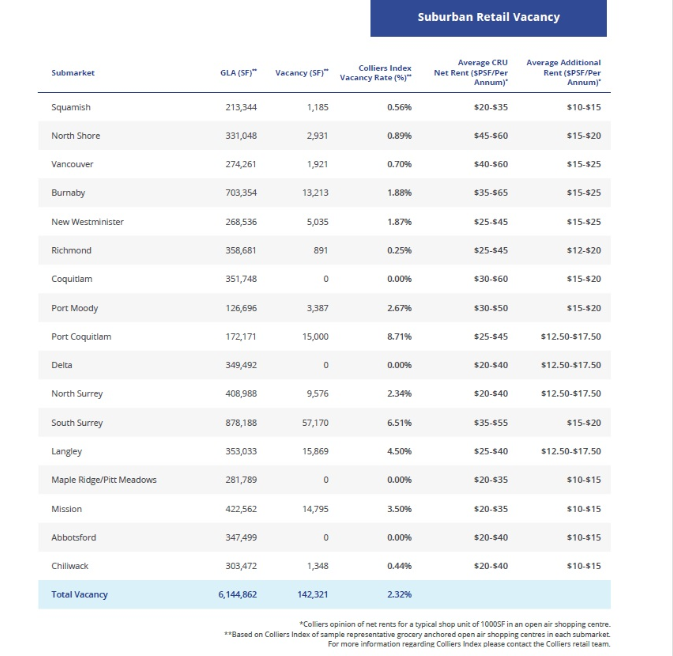
In its report, Colliers finds the retail vacancy rate in urban areas sits at 2.5 per cent, while the suburbs come in at 2.3 per cent.
“Really it’s a story of resiliency,” Nicholls said. “We’ve gone through the worst of the pandemic, let’s hope, and out the other end. Retail has not only survived, but it’s re-invented itself, and there’s also lots of demand.
One thing the DVBIA believes could boost retail is more events in the core.
“We had our first summer movie nights this past Thursday, a family friendly event, and over 60 per cent of the respondents to a survey said they came downtown specifically for that event,” Marshall said.
“We know when we activate our public spaces, whether they be with street promenades or movies or music or entertainment, that’s an added attraction, an added benefit of coming to that place to do your shopping, to go out to eat, to have a date night.
“You can do all these things at home, but it’s quite a different experience when you actually get out and you’re around other people, and you experience your community the way it’s supposed to be experienced.”
As for what’s ahead, Colliers projects that vacancy rates will drop over the next 12 months, and that retail rents will increase as a result.
Still, it notes between high inflation, soaring interest rates, recession risk, labour shortages, rising construction costs and Russia’s war on Ukraine, there is still plenty of uncertainty.