Vancouver woman shares cautionary travel tale amid rising COVID cases

Posted July 14, 2022 8:01 am.
Last Updated July 14, 2022 8:02 am.
As much of the world is plunged into yet another wave of COVID-19, it’s not stopping people from travelling after more than two years of being stuck at home.
However, the situation comes with a warning from a woman in Vancouver who recently returned from London, England with more than just some memories.
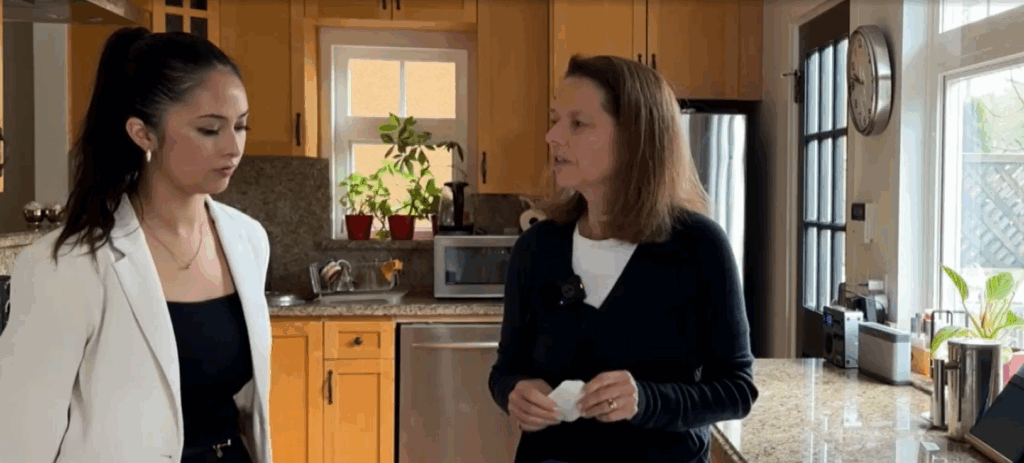
Jessica Crompton flew to the U.K. last month to visit her aunt, who had yet to meet her young daughter due to the pandemic. She doesn’t regret the trip but is telling anyone who may be thinking of taking a vacation abroad to think twice.
“Avoid that suspension of disbelief — it’s still out there and it’s extra contagious right now. So, don’t let it ruin your vacation,” she told CityNews.
Crompton and her family flew back last Monday and within 48 hours, she had tested positive for COVID-19. Now, her daughter and partner have it as well.
Prior to flying home from Heathrow Airport, Crompton had an allergic reaction and was dealing with asthma, linked to her previous COVID-19 infection earlier in the year. She says she didn’t have any concerning symptoms to make her think she had caught the virus again, and as a result, she didn’t take a test.
“I’ve also had super bad asthma since I had COVID in February and my doctor has been putting me on progressively stronger inhalers and they’ve caused me to have a constant hoarse throat and I’ve actually lost my voice a couple of times as the medications got stronger. So, I had that hoarse throat again and I thought, ‘OK, I’ll dial back the medication for today.’ And then I was packing all day Sunday and I woke up Monday and was like, ‘Oh, it’s kind of gone. I feel OK. I guess it was all that allergy reaction,'” Crompton recalled.
Related articles:
-
Canada’s random COVID testing returning for vaccinated air travellers
-
Canada extends COVID border measures, will move testing outside airports
-
Customs officer union laments ‘IT consultant’ duties in ArriveCAN era
She admits she feels awful knowing she may have infected anyone on her flight.
“And then on the flight, I remember thinking, ‘I feel hot,’ but then I thought I heard the flight attendants talking to each other about it being hot in the cabin and three different people switched seats to come sit next to us and the third person had a lot of perfume on, and I was really allergic to that. So, I was coughing a little bit, but that’s really normal for me to have an asthmatic cough, especially since February. Like I said, I have not been in great shape since then. And when I woke up on Tuesday, I thought, ‘I don’t feel great.’ And I was coughing more and more on Tuesday… and Wednesday I thought, ‘I should take a test’ and it was positive immediately.”
Crompton says it’s hard to know where she may have picked up the virus.
“In retrospect, I don’t think I felt anything other than allergies on Monday. I think if I had not had the [allergic] reaction on Saturday, then I would have been, ‘Oh, this isn’t feeling like allergies,’ but like I said, it’s been confusing for me because I’ve had such a hard time since I had COVID in February.”
She says she was masked the whole time she was travelling, except to eat. Crompton adds her flight was packed and so was the airport, where she tried to implement her own six-foot social distancing rule.
“I would not recommend taking a flight anywhere right now because [the virus] is just so prevalent right now,” she said.
Crompton thinks there’s a level of complacency right now because COVID-19 rules, in many jurisdictions, have been relaxed.
However, she warns of the dangers of letting your guard down.
“I know it was very exciting for me to live like there was no COVID for a week-and-a-half until reality set in, but I think you have to be prepared if you’re travelling to live like COVID is still out there. So, avoid crowded places, try to stick to the outdoors, wear a mask when you’re indoors. I know it’s a pain and some people are very over it, but I really should have done that more,” she added.
Crompton says she hasn’t been able to get a hold of anyone at the BCCDC, Health Canada, or Air Canada to report her positive test result.
She’s sharing her flight information in case anyone else has gotten sick after flying home. Her trip home was on Air Canada Flight 863 on July 4. The flight departed at 3:30 p.m. local time and landed at YVR at 5:15 p.m. PST.
Expert warns of dangers
Marianne Levitsky, a professor with the Dalla Lana School of Public Health at the University of Toronto, is choosing not to travel by plane this summer and only by vehicle.
“Unfortunately, we’re sort of back to the precautions we were using earlier in the pandemic, especially precautions against an airborne virus. If you’re indoors with a lot of people, it’s very good to take precautions now. Think about the ventilation but often if you’re travelling, you don’t have much control over the ventilation. [On airplanes] one thing people can do is turn on the ventilation nozzle above their head, I wouldn’t say at full blast but close to medium to high, that’s going to help. The problem with air transport is often the riskiest situations are before you’re in-flight so, when you’re in a crowded line, you’re waiting a long time for customs or something like that.”
While masks are still required at all Canadian airports, Levitsky believes it’s time to bring back those measures everywhere — whether it’s on a plane, BC Ferries, or transit.
“A mask is everything that covers your mouth and nose, and a respirator is something that’s actually approved to protect you from airborne contaminants. Before you go anywhere, at home learn how to get a good respirator or equivalent and how to fit it and check the fit so you don’t have any leakage of air around the mask itself.”
Levitsky says since lifting many travel rules, officials have left it up to people to do their own risk assessment.
“It is tough… but that’s the position we’re in and if we’re really sure that our risk assessment says, ‘We don’t want to get this and we’re at fairly high to medium risk if we do, then we’re going to have to take those precautions to protect ourselves.'”
She suggests avoiding doing anything risky prior to travelling, meaning avoid close quarters with others and go back to taking rapid tests regularly.
On Thursday, the federal government announced it was bringing back, as of July 19, random COVID-19 testing for vaccinated air travellers arriving at any of the country’s four main airports: Vancouver, Calgary, Montreal, and Toronto. Testing and quarantine requirements remain in place for unvaccinated or partially vaccinated travellers arriving from abroad.