‘More to do’: B.C. paramedics union agreement with province
Posted February 15, 2023 5:45 pm.
Last Updated February 15, 2023 5:46 pm.
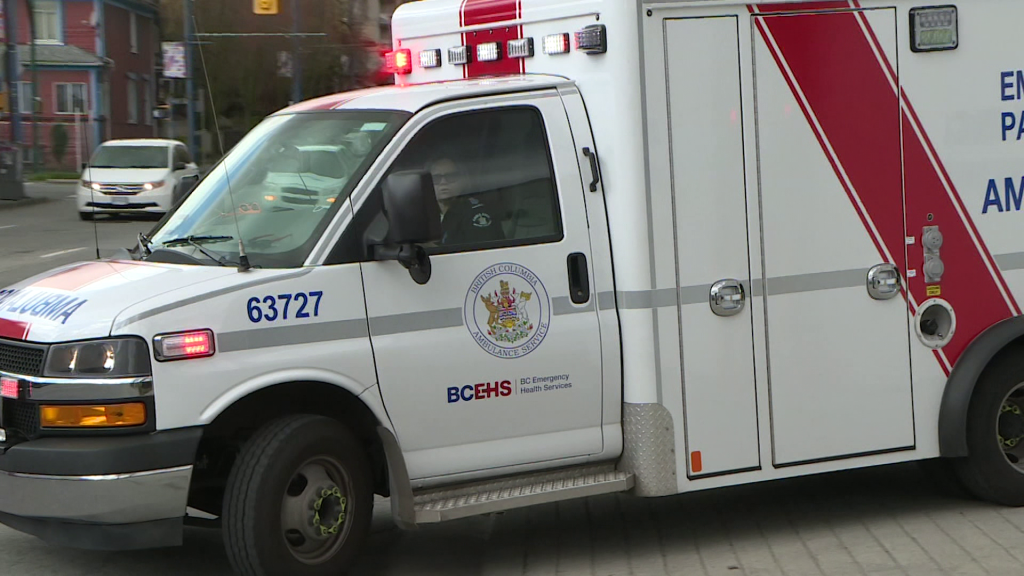
More details of a new wage deal for ambulance paramedics and emergency dispatchers in B.C. have been released.
Although the union voted overwhelmingly in favour of ratifying it, the president of the union says more needs to be done to improve service.
Over 96 per cent of the Ambulance Paramedics of British Columbia (APBC) members voted in favour of ratifying a new wage deal with the province Tuesday.
The agreement’s main features address changes to wages, benefits, and staffing throughout the province.
Related articles:
-
B.C. paramedics union ratifies agreement with the province
-
B.C. paramedics reach temporary deal with province, immediate pay increase
In a news release from the B.C. government, it says the ratified agreement includes a general wage increase as follows:
“Year 1 – a flat increase of $0.25 per hour, which provides a greater percentage increase for lower-paid employees, plus a wage increase of 3.24 per cent.”
“Year 2 – 5.5 per cent plus a potential cost-of-living adjustment to a maximum of 6.75 per cent.”
“Year 3 – 2 per cent plus a potential cost-of-living adjustment to a maximum of 3 per cent.”
The deal also includes improvements for emergency care in rural communities.
“Other achievements in this round of negotiations included increases to improve on-call coverage and response times in rural and remote communities, as well as provisions on Indigenous-specific anti-racism initiatives, including paid leave to support Indigenous employees in connecting with cultural and spiritual beliefs. In addition, the parties agreed to diversity, equity, and inclusion initiatives, including a provincial working group and the removal of gender-normative uniform rules,” the release reads.
‘A lot of work to do’: Union president
Although he says the union is “really excited about the deal,” the President of the APBC Troy Clifford says more improvements need to be made.
“Work needs to continue on things like making sure that we get to the highest acuity calls,” he said. “I think that’s the work that we need to continue to do with the provincial government and the BC ambulance service to make sure that everybody gets an ambulance in their time of need, and that’s not happening every day in the Lower Mainland.”
Clifford says that the new agreement will also help with the hiring of more workers, which will inevitably cut back on response delays.
“We’re still seeing delays on ambulances. And so what this collective agreement does, it allows us an opportunity to recruit and retain better than we were. It allows us to be more competitive in the Health Human Resources area, but it also puts some frameworks in place for service delivery around the province,” he said.
He says after staffing levels come up, he wants to see more ambulance stations created to help serve the growing population centres throughout the region.
“We don’t have enough stations, geographically located. For instance, Burnaby has one station that covers all of Burnaby,” he said.
He says he is hopeful that further funding from the government will come, in order to keep improving ambulance service across the province.
But in the meantime, he says the ambulance service needs continued public support to keep up pressure on the government.
“I’ve been meeting with municipal governments all over the Lower Mainland and province, and they’re all in agreement to really pressure the government to make sure that we meet those thresholds that are committed to so that everybody gets an ambulance in their time of need,” he said.
He says more resources and funding will be needed to meet demands on the system both today and in the future.
“The key thing right now is to make sure that we have the right amount of resources, and that we continue to add resources and funding to make sure that we can meet not only today’s demand but the future demand,” he said.