Indigenous parents camp outside B.C. Legislature after month-old baby removed

Posted April 18, 2023 2:56 pm.
Last Updated April 18, 2023 4:08 pm.
A First Nations mother and her Metis husband are camping outside of the B.C. Legislature after their newborn baby was taken into care by the province Monday night.
Sonja and Philip Hathaway’s baby daughter, Amella, was born on March 11, and it wasn’t until March 14, they say, that they received any indication from the Ministry of Child and Family Development (MCFD) that they were being investigated and that their child could possibly be taken from them.
“The pain is as endless as the sea,” Philip told CityNews after Amella was taken out of the Hathaways’ care.
The Hathaways, who currently live on a boat that Philip built as they intimately feel the pressures of the province’s housing crisis, were living in Campbell River, in northern Vancouver Island, until Sonja was nearing her due date.
Born two months prematurely, Sonja says baby Amella is getting closer to going home each day. However, when the parents went to the Neo-natal Intensive Care Unit (NICU) at Victoria General Hospital Monday night, they were met by police officers telling them that the MCFD had taken Amella into care, and they were no longer able to visit or see their child.
“We had a release plan to avoid apprehension at all costs,” Philip said Tuesday. “When they found [out that] Sonja was still looking for better options, without calling or notifying us or giving us any paperwork, they took Amella when we weren’t there.”
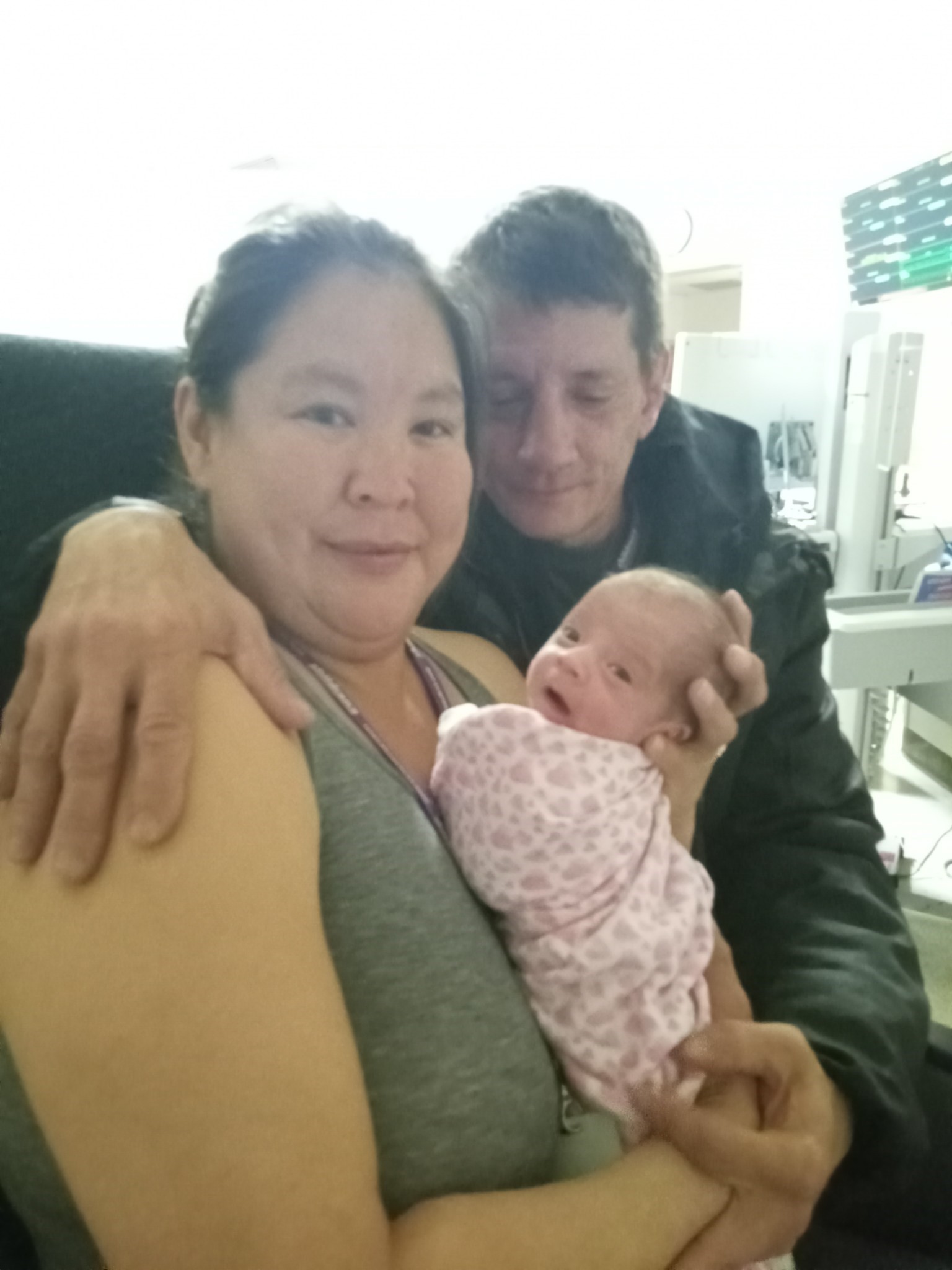
A First Nations mother and her Metis husband are camping outside of the B.C. Legislature after their newborn baby was apprehended and taken into care by the province Monday night. (Submitted by Philip Hathaway)
Philip says Sonja, a Dene Thá woman, is now having to hand-pump on the lawn of the Legislature, as her access to breastfeed Amella or deliver milk, has also been cut off.
Sonja says when she was just two months pregnant, she went to the ministry to get help finding suitable housing, thinking the department workers would be able to set her family up with resources before the baby’s arrival.
“I went to them to get some help from them, find housing, to get support. And then after that, I just kept meeting them, every week I would meet with them,” she said Monday. “They said that they were going to help us with housing and everything else, and how they were going to support us, leading up to when my baby was born.
“And then they had concerns about the baby,” she said.
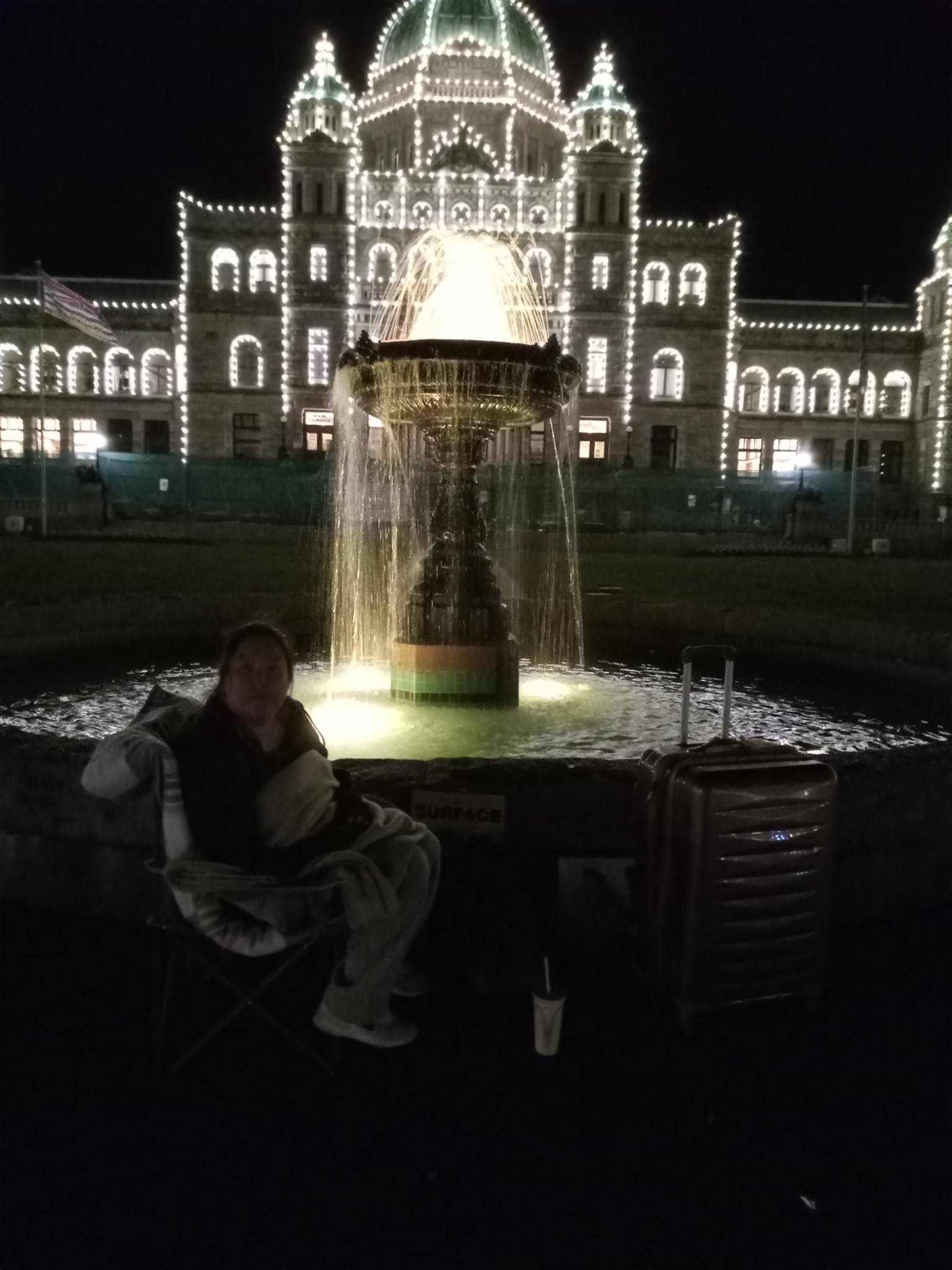
A First Nations mother and her Metis husband are camping outside of the B.C. Legislature after their newborn baby was apprehended and taken into care by the province Monday night. (Submitted by Philip Hathaway)
Indigenous children are disproportionately over-represented in B.C.’s child and family services system. Indigenous children represent 68 per cent of children in care, while only comprising less than 10 per cent of the child population in the province.
In a letter to the Hathaways dated March 29, which CityNews has seen, the MCFD outlines alleged reasons for why Child Protective Services have been engaged by the department. The ministry says that along with “concerns that the current housing situation is a safety concern to have baby return to,” it also alleges there is the “likelihood of physical harm due to domestic violence” due to an incident in which RCMP officers were called on Dec. 15.
“There was no domestic violence,” Sonja said, adding that a no-contact order against Philip that was in place was revoked with her consent. Philip is scheduled to front court over the alleged incident at the end of the month.
“It’s ludicrous that they’re saying Philip is abusive, he’s not. He’s the most loving husband. He’s always there, and now the baby’s born, he’s always with the baby, taking care of the baby,” she said. “It’s ludicrous.”
The incident leading to the no-contact order left Philip badly beaten, needing to spend 24 hours intubated in the Intensive Care Unit.
From Dec. 15 through to Feb. 17, Sonja and Philip were unable to see each other, Sonja says, explaining, “It’s why I had a premature birth, all the stress they put us through.”
Hathaways were not notified of investigation until after Amella’s birth
Sonja says even through this period of time, MCFD did not notify either of the Hathaways that this incident would trigger an investigation into the safety of the child.
“They’re using the past, six months ago, against us,” Sonja said. “They’re saying that me and my husband argue, and about how we used to drink, and … I told them that I have drank twice, and they’re using that against us.”
“We have been asking for help through the whole pregnancy leading up to when the baby was born. They haven’t said anything, or done anything about it. We’ve been asking for counselling and counselling for couples, and they say there’s nothing for couples at all,” she added.
Sonja says the MCFD has been pressuring her to separate from her husband of 10 years, to maintain care of Amella.
“All they’re doing is offering a transition house … they don’t want me and my husband to live together,” she said, adding the transition house offered is located in Vancouver’s Downtown Eastside — where Sonja has no community, family, or support available.
“It is scary because once we looked it up on the computer where this place was, it’s right off Hastings Street, and I’m like, ‘Are they crazy?’
“Like, they’re actually going to send me there? I find it dangerous that it’s right off Hastings Street. It’s not safe for myself or my daughter,” she stressed.
In order to come up with a safety and release plan, the ministry called for a Circle of Care meeting with the Hathaways on March 30. Sonja and Philip say they were not notified of this meeting until 12 hours before, and therefore were not able to organize legal counsel, as is their right, for the meeting.
The meeting, as outlined in the letter dated March 29, was to be held with the parents, Nations, family members, and a neutral facilitator to come up with a plan to address the concerns outlined by CPS. However, Sonja says an Auntie, who she has no contact with, was the family member engaged by the MCFD, and no other Indigenous advocates were in the meeting with the family.
Care plan was agreed to Friday, but removal went ahead without knowledge
Philip says reluctantly, Sonja agreed on Friday, April 14, to travel with Amella to Vancouver in order to maintain her care of her child. The plan that was agreed to, was made collaboratively with the Mothers’ Centre Society and other Indigenous advocacy groups, including advocates from Jordan’s Principle and the Victoria Native Friendship Centre, Philip told CityNews.
Philip says even though the family had agreed to the plan, Amella was apprehended without notice.
“And we’re like, ‘Where’s the paperwork for it?’ And this is there is no paperwork. You can’t just apprehend a child without paperwork. And what about this plan for Sonja to go to Vancouver to avoid this apprehension? And the worker said, ‘Well, I’m from Victoria. I work for Victoria MCFD. This is a file from Campbell River. So, I don’t know what’s going on.’
“We made an agreement that to avoid apprehension of the child. Sonja would go, and we got it in writing. We got it through our lawyers that they agreed to it,” Philip said.
B.C. affirms Indigenous Peoples’ rights to family and community care
The removal of Amella comes after the province has spent recent years making changes to child-welfare laws, upholding Indigenous jurisdiction over their families. In September 2019, the province ended its use of “birth alerts” — the child-welfare practice of issuing a safety alert without the parents’ consent.
Instead, the province said at that time it was moving to a “voluntary approach of providing early supports and preventative services to expectant parents will help them plan and safely care for their babies.”
“We know that birth alerts have been primarily issued for marginalized women and, disproportionately, Indigenous women. We acknowledge the trauma women experience when they become aware that a birth alert has been issued. We also heard calls to end this practice from Indigenous communities, organizations, and the report from the National Inquiry into Missing and Murdered Indigenous Women and Girls,” the minister at that time, Katherine Conroy, said.
Meanwhile, in October last year, B.C. became the first province in the country to expressly acknowledge the right of Indigenous Peoples to care for their children.
“The amendments, the largest in more than 25 years, will respect the inherent rights of Indigenous communities to provide their own child and family services, and to keep Indigenous children safely connected to their cultures and their communities,” the government said at that time. “The modernized legislation will support Indigenous Peoples to re-establish, develop and exercise child-welfare laws for their community members and to recreate their own models for child and family service delivery, including family support, child protection, and adoption services.”
Sonja and Philip have now set up a petition to help them regain care of Amella. “The B.C. Government has taken too many children,” the parents say in the petition.
Philip says he and Sonja won’t be moving from the Legislature lawn until they get answers.
“We’re not leaving the Legislature until something’s done. We don’t care. We know it may take months — we’re literally that committed. We are not leaving this field,” he said.
In a statement to CityNews Tuesday, Minister of Children and Family Development of British Columbia Mitzi Dean said a number of factors are considered when decisions are made.
“Due to confidentiality, I’m not able to publicly comment on, or even confirm whether the ministry is involved with, any person or family,” she said.
“What I can say is that my ministry works every day to keep children safe with their families and connected to their culture and communities, whenever possible, as we all agree this leads to the best outcomes for children. The safety and well-being of a child is always the ministry’s first priority. The decision to remove a child is not made lightly – it is always an absolute last resort to ensure the child’s safety. The ministry takes every step possible to keep a child connected to their parents, extended family or community – and staff continuously explore all the options to keep a family together whenever possible.
“Lack of housing and poverty alone are not grounds for removing a child, and legally the ministry cannot take a child into care for those reasons alone. The ministry can only bring a child into care when there are protection concerns,” Dean’s statement concluded.