B.C. premier lays out 3-part plan to respond to U.S. tariff threat
Posted January 21, 2025 2:25 pm.
Last Updated January 21, 2025 8:59 pm.
Premier David Eby says retaliatory tariffs, targeted tariffs, and specific embargos are not out of the question in B.C.’s response to the threat of U.S. tariffs.
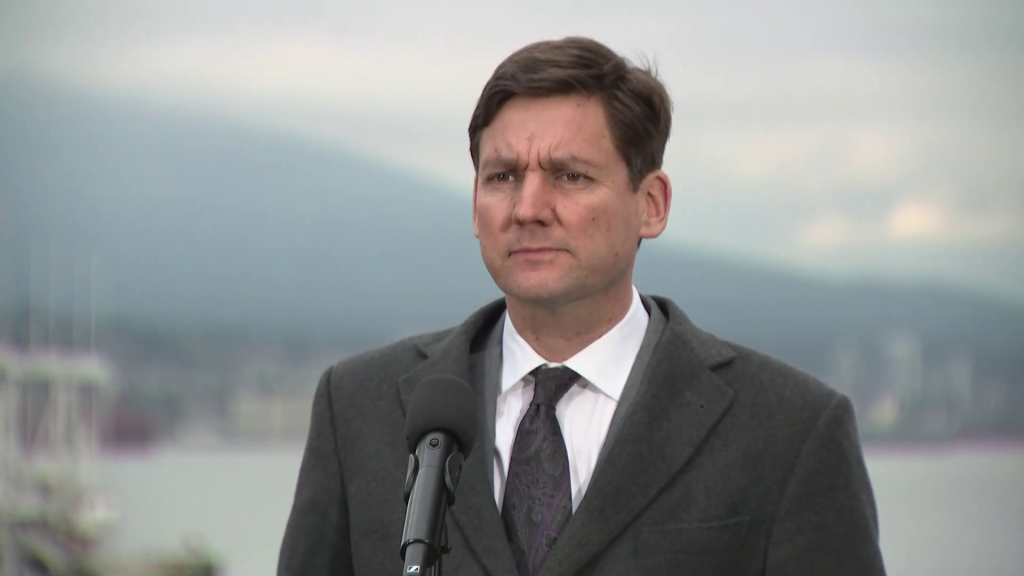
Speaking near the Port of Vancouver Tuesday, Eby announced his government’s three-part plan to address the proposal U.S. President Donald Trump has made to impose a 25 per cent tariff on all goods imported from Canada.
“For our province, the tariffs mean potentially the loss of tens of billions of dollars; more than 100,000 jobs. It is a big deal for British Columbia,” said Eby.
“It’s not a fight that we picked, and in fact, we think this is going to hurt Americans as badly as it does Canadians, but we’re going to stand; we’re going to support federal efforts to respond with targeted tariffs to make sure that the Americans understand that we will not surrender.”
On Monday, B.C.’s finance minister Brenda Bailey told reporters that targeting Republican-held states for possible retaliatory tariffs could be one of the “strategic ways” to influence people in Trump’s own party.
Eby confirmed Tuesday that the red state-targeted tariffs will be part of the province’s three-part plan.
“We’re supporting the federal government in direct-response targeted tariffs at Republican districts to make sure that the party that is bringing these tariffs to us understands why trade increases the prosperity of our countries,” said Eby.
Secondly, Eby says B.C. is forming a “task force on trade and economic security for the province” co-chaired by notable local business people, CEOs, and Indigenous leaders. The task force, he says, will help ensure that the province doesn’t remain dependent on trade with the U.S.
“What President Trump has done has let us know that a partner that we’ve had for many, many years, that we trust, that we rely on, that’s like family for us, can no longer be relied on. And I, for one, will not allow British Columbia to stay in a position of being dependent on a partner that we can’t count on.”
To achieve that independence, Eby says the province will, thirdly, diversify its portfolio, deepening and expanding trade relationships with other countries around the world — especially those also under threat of U.S. tariffs.
Eby says B.C. might follow Ontario’s lead, possibly declining to purchase American alcohol products. As B.C. is one of the “biggest purchasers” of American booze, Eby says it would “definitely send a message.”
He also detailed the possibility of taxing American trucks travelling through B.C. to supply Alaska and changing the provision of electricity B.C. supplies to some states.
“Anything that we can identify to help Americans understand the integrated nature of our economies and the harm that it’s done to Canadians is actually doing harm to Americans as well,” said Eby.
“We have trade agreements with the Americans that we have to treat their products like our own. But if they’re not going to abide by our trade agreements, then neither are we.”
Eby says he expects the Canadian federal government to help support trade-dependent businesses and workers who will be immediately affected by the proposed tariffs. Retaliatory tariffs, he explained, would result in revenue for the federal government.
“One of the messages that I delivered to the feds was that revenue should go to affected businesses and workers who are impacted by these tariffs to ensure that British Columbian workers and businesses that are impacted by retaliatory tariffs are kept whole, and those workers who are impacted by American tariffs are also supported,” said Eby.
—With files from The Canadian Press