Is B.C.’s new minimum wage keeping up with rising costs?

Posted June 2, 2025 1:04 pm.
Last Updated June 2, 2025 4:49 pm.
Monday marks the first business day in B.C. since the province implemented an annual increase to the minimum wage, but researchers say the raise is still several dollars short of reality.
On Sunday, the general minimum wage went up from $17.40 to $17.85 per hour. The increase follows the changes mandated in the spring 2024 updates to the Employment Standards Act.
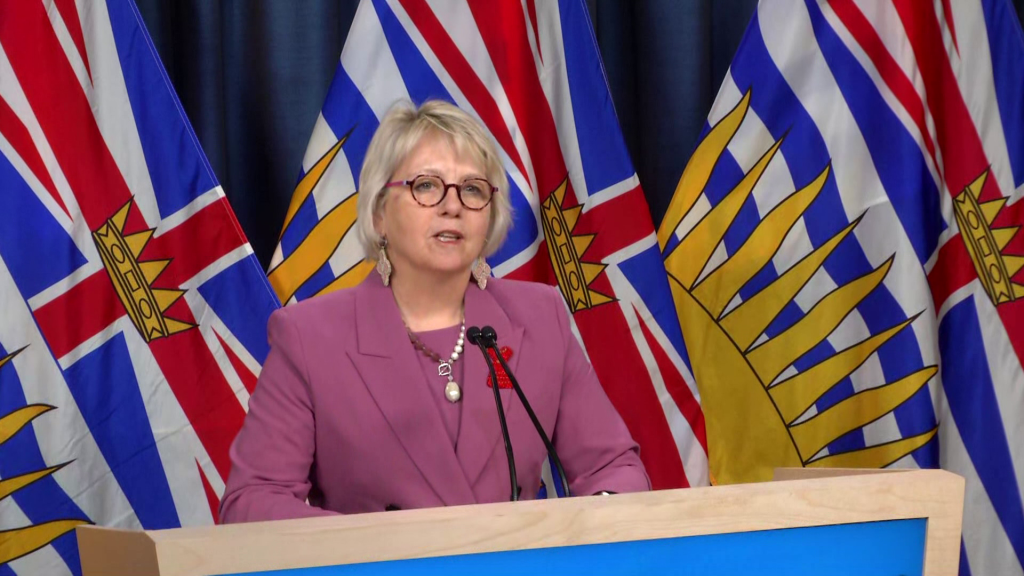
CLICK HERE TO LISTEN TO 1130 NEWSRADIO VANCOUVER LIVE!Labour Minister Jennifer Whiteside has said minimum wage earners are vulnerable to inflation and unpredictable price jumps.
“That’s why we took action last year to ensure the minimum wage keeps up with the cost of living so workers don’t fall further behind,” Whiteside said in a release in February.
But the BC Society for Policy Solutions says $17.85 per hour isn’t enough to keep up with the cost of living, and many are falling behind.
Anastasia French, managing director of Living Wage BC, helped conduct research for the society that shows even the new minimum falls $9.20 per hour short of what someone needs to live with dignity in Metro Vancouver.
By the latest measure, French says a living wage in Metro Vancouver is now $27.50 per hour.
“The living wage is the [minimum] amount that a worker needs to earn to afford basic essentials like food and rent. It doesn’t cover things like savings, paying off debt, or caring for an elderly or disabled family member. It’s supposed to represent a basic, but decent, quality of life, and how much you need to earn,” French explained.
Meanwhile, she says the minimum wage is “an arbitrary number” set by the province.
In 2016, the BC NDP campaigned on an election promise of raising the minimum to $15 per hour, and eventually fulfilled that promise as government. French says since then, the number has been pegged to general inflation, with $15 per hour as a baseline.
“That means that every year, the lowest-paid workers are guaranteed a pay increase, which is good news. But the other side of it is that every year the cost of living, for the cost of food and rent, keeps going up at a much, much higher rate than the rate of general inflation, which takes into account all sorts of things, including luxury goods and furniture and fridges and that kind of thing, which aren’t really going up as much as rent and food costs,” said French.
Her research shows that 37 per cent of employees in Metro Vancouver earn less than the living wage benchmark. French says, disappointingly but unsurprisingly, women and racialized workers are much less likely to earn a living wage than their counterparts.
“And then when you intersect those two statistics, you find that half of all racialized women in Metro Vancouver don’t earn a living wage.”
French says she’d love to see every worker in B.C. earning enough to live, but before that, the province could join the nearly 500 other organizations committed to paying their employees a living wage.
“If they can make sure that anyone who’s working directly for them, directly or as a contractor, is earning a living wage, that’s thousands of workers across the province who will be lifted out of poverty and ensuring that they can earn enough to get by.”
She acknowledges that not every employer could survive the jump to paying its workers a living wage, but says progressing to that goal is worthwhile.
“[Businesses] know morally it’s the right thing to do, but because it makes business sense as well. They know every time they have to hire new staff, it costs them money every time they need to retrain people, and actually, if people aren’t leaving because they’re earning enough money, then that’s one way to really cut those costs,” French explained, adding that Living Wage BC works with businesses to close the gap.
“Because the other reason why businesses are struggling right now is that people don’t have much money to spend, and when workers are working three jobs, that’s not time that they can go to the shops and treat themselves to a haircut or a coffee in our local cafe. And so, if we couldn’t make sure that everyone is earning enough to get by, that helps business, it helps the community, and it helps workers.”
In a statement to 1130 NewsRadio, Minister Whiteside says the province continues to invest in affordability measures.
“We know there is more work to do, and our government will continue to take action to prevent the lowest paid workers from falling further behind,” said Whiteside.
She did not comment on the provincial government’s failure to commit to provide its own workers a living wage.