B.C. government will not support pipeline deal signed by Carney, Smith: Premier David Eby
Posted November 27, 2025 3:37 pm.
Last Updated November 28, 2025 2:41 pm.
There may have been warm smiles in Alberta, but reaction in B.C. was ice cold Thursday after Prime Minister Mark Carney and Alberta Premier Danielle Smith signed a memorandum of understanding (MOU) to look into building a pipeline to B.C.’s north coast.
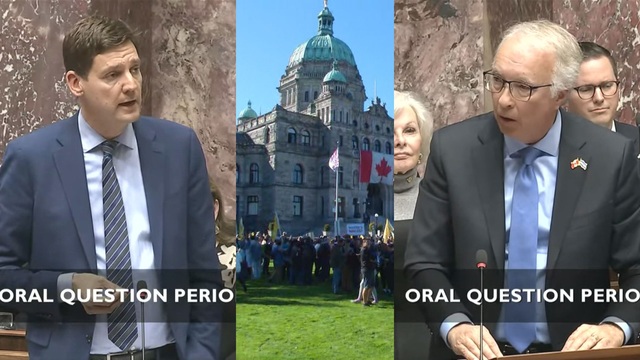
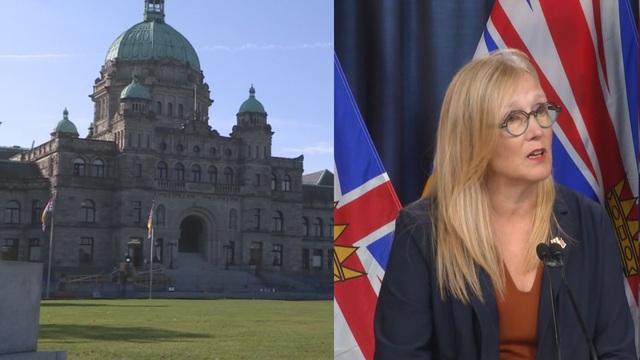
Premier David Eby says the provincial government will not support the pipeline, saying efforts to push it through B.C. have created an unnecessary “distraction” from major projects that are already underway in the province.
He went on to describe the pipeline idea as an “energy vampire,” fearing it could divert federal government attention away from ideas much closer to being reality.
“[Those projects that are underway] have all their permits, major companies advancing them, thousands of jobs, billions of dollars of activity, really exciting nation-building projects that we are going to deliver,” he said.
“But we require a federal government that keeps its eye on the ball.”
While Eby remains steadfast in his opposition, recent polling numbers show he doesn’t speak for everyone.
Fifty-two per cent of British Columbians surveyed agreed provinces should have veto power for pipelines built on their land if conditions aren’t met. The majority, 56 per cent, are OK with a pipeline.
He says it should not proceed without the support of coastal First Nations, who have been saying for months they will use every tool in their toolbox to make sure a pipeline will never be built.
But for those who live along the north coast, the idea of tampering with the west coast tanker ban is a non-starter.
Coastal First Nations president Marilyn Slett says the tanker ban is not up for negotiation. She says the Nations have no interest in collaborating or benefitting from the project.
“We will never allow oil tankers near our coastal waters,” said Slett.
First Nations say the risk of a catastrophic oil spill outweighs the potential economic benefit of the pipeline, threatening to erode decades of work that sought to protect the ecologically rich north coast.
“We are not interested in being equity partners in a project that has the potential to destroy everything that we have built,” Slett said.
Ian McAlliser, conservation adviser with Pacific Wild, says if the pipeline is approved as a project of national interest, he is concerned about what other protections could be side-stepped in the name of economic patriotism.
“As we know, Prime Minister Carney was elected not as a climate change denier, but that is exactly what he has become,” he said.
“The prime minister and the premier of Alberta are clearly hiding behind the maple leaf when they are just pushing Canada further and further towards being a true, bona fide petrol state.”
Eby says he is disappointed the federal and Alberta governments came up with the plan without having B.C. at the table, but says the province will not be taking legal action to support the project.
He says the pipeline has no private-sector backing, and the only way it could be built is with taxpayer money.
“It similarly has no company that has stepped up and said, even under the most optimistic condition, that they would be interested in building it, that if it were already built, that they would be interested in buying it, which leaves only one possible way that it could get built, which is through a massive taxpayer-funded support in the order of $30-$40 billion,” he said
At a signing ceremony in Calgary Thursday, Carney and Smith signed the MOU that commits them to working toward building an oil pipeline to the West Coast. They both agreed to terms that commit Ottawa to adjusting the West Coast tanker ban if a pipeline is approved as a project of national interest under the Building Canada Act and provides “opportunities for Indigenous co-ownership and shared economic benefits.”
Now, with years of possible controversy ahead, it remains to be seen whether a northern B.C. pipeline is a vision of prosperity, an environmental nightmare, or just a vivid pipedream.
— With files from The Canadian Press.