B.C. dispels vaccine misinformation as reported measles cases rise to 102
Posted July 10, 2025 6:56 am.
Last Updated July 10, 2025 9:49 pm.
B.C.’s health ministry says it’s working to fight misinformation and improve immunity while a wave of new measles cases has cropped up in northern parts of the province.
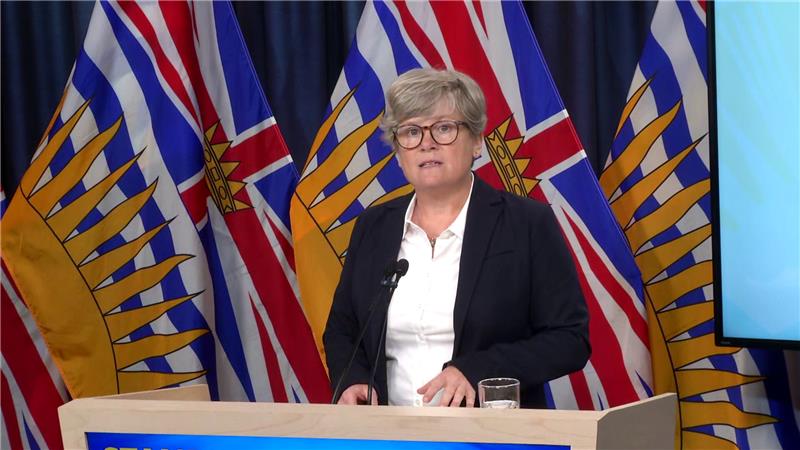
Speaking from Victoria Thursday, Minister Josie Osborne and experts shared that the province has seen 102 cases across all health authorities since the beginning of the year. Currently, the ministry says 10 measles patients are in hospital, and one case is considered “active and contagious.”
CLICK HERE TO LISTEN TO 1130 NEWSRADIO VANCOUVER LIVE!By last report in late June, the BC Centre for Disease Control (BCCDC) says about two-thirds of the cases were in the Northern Health region.
The reported number has more than doubled in the span of less than one month.
“It did not spread broadly until the end of May,” explained Dr. Martin Lavoie, deputy provincial health officer on Thursday.
“The virus found a pool — a pocket — of people that were not immunized, and large enough that it started to spread. And now it’s running its course through that group of people. And so that’s what we’re seeing. And this is actually happening mostly in the north, with a few cases here and there in the rest of the province at this point, without any significant spread locally in other health regions.”
Lavoie said the virus was originally brought into B.C. by people who had travelled abroad but is now being spread locally.
Dr. Jong Kim, chief medical officer at Northern Health, said the province is working with the “most-affected” community in the region to build a relationship of trust, organize measles outreach, and set up immunization clinics.
Measles is a highly infectious disease transmitted by airborne spread, with initial symptoms that include fever, cough, runny nose, and red, watery eyes.
A rash often develops a few days later, beginning on the face and then spreading down the body.
Health authorities say those who are most at risk of getting measles are those who have never had the disease and those who have not been vaccinated.
Lavoie said adults are more at risk of severe disease, as well as children below the age of five, the immunocompromised, and pregnant women.
He says false reports that vaccines cause autism or other conditions have led to a reduction in vaccine coverage in recent years.
“This has caused a lot of damage in people’s minds,” said Lavoie, dispelling other myths about measles, including that it can be prevented with cod liver oil or vitamin A alone.
“Vaccination really is the only really very effective and safe way to build immunity against the disease. And so based on all these things, over the years, we’ve seen the vaccination coverage rates decline across the globe, actually, in many countries, unfortunately. And then related to that, we have seen an increase in the number of cases of measles and also significant outbreaks.”
He repeated that the best way to protect yourself from measles is by getting two doses of the MMR vaccine if you haven’t already.
Lavoie also points out that the current situation is not a pandemic.
Osborne thanked the doctors for their advice and said B.C. is lucky to have their guidance for making evidence-based policy.
“It’s not appropriate for politicians or for people not with the expertise to be drawing conclusions that simply are misguided or plain wrong, and that’s why we’re encouraging everybody to pay serious attention to this. To understand that the measles, mumps, and rubella vaccine — the MMR vaccine — is safe. It is effective. It is the best way to protect yourself, to protect your loved ones, to protect your community, and [we’re] encouraging everybody to check their immunization records and ensure that they are up to date with their vaccinations and to take the necessary precautions to protect people, especially when travelling,” said Osborne.
Alberta reported Wednesday that 1,246 people have been infected with the highly contagious disease since March, making it the region with the most measles cases per capita in North America.
Alberta has twice the rate of confirmed measles cases as Ontario, where 1,910 total confirmed infections have been reported since its outbreak began in October. Despite being right next door and with the busy summer travel season well underway, B.C. health officials are optimistic that we are not headed down the same path, thanks to our higher immunization rates.
Health Canada says measles was eliminated in the country in 1998, and the spike in Alberta has been the most severe in almost 40 years.
Last month, B.C. Premier David Eby said the growing spread of measles across Canada is “the sadly predictable outcome” of the “recklessness” of anti-vaccination politicians.
He told a Vancouver news conference that the focus for provincial public health authorities now is to make sure that people who are not protected receive full vaccination.
—With files from The Canadian Press and Monika Gul.