Year in Review: A look at the top stories of 2021
Posted December 20, 2021 5:44 am.
Last Updated December 20, 2021 11:04 am.
For a second year in a row, COVID-19 dominated news headlines, though, just like the virus, many have learned to adapt and evolve to life in the midst of a pandemic.
B.C. had a rather trying weather-related year, experiencing a deadly heat dome and resulting destructive wildfires, along with catastrophic flooding.
The confirmation of hundreds of children’s remains at the site of a former residential school in Kamloops forced a revitalized national introspection on Canada’s roots and led to the documentation of even more such sites across the country.
Here is CityNews Vancouver’s Year in Review; a collection of the major headlines from a very busy year. The stories below are listed in no particular order.
Remains of hundreds of Indigenous children found at sites of former Canadian residential schools
2021 was the start of a true reckoning of the horrors of Canada’s residential school system.
The catalyst was the gutting confirmation of the remains of hundreds of people, mostly children, on the grounds of the former Kamloops Indian Residential School.
The discoveries led Canada to mark the first National Day for Truth and Reconciliation. Wearing orange, many virtual ceremonies were held to honour the survivors of residential schools, remember the victims, and the acknowledge the dark chapter of Canada’s history.
But many expressed disappointment when Prime Minister Justin Trudeau chose to not mark the historic day with the Tk’emlúps te Secwépemc, and instead visited Tofino with his family, a move he later apologized for.
Related Articles:
- Discovery of children’s remains at former Kamloops residential school an ‘unthinkable loss’
- Remains of 182 found near former residential school in B.C.
- 751 unmarked graves found at former residential school in Saskatchewan
Lack of closure in two high-profile missing persons cases
In mid-January, the husband of 48-year-old Trina Hunt of Port Moody reported her missing after the pair allegedly spent a “digital detox” weekend in Hope. Believed to have vanished, her remains were found in that community in March. Police publicly confirmed the discovery in May.
In August, a similar case in Langley as friends and family searched for 40-year-old mother, wife and educator Naomi Onotera. After searching her home, homicide investigators announced in mid-December that Onotera’s husband had been arrested and charged in connection to her death.

A missing person poster for Naomi Onotera in displayed near a trail in Langley, B.C. (Image Credit: CityNews)
A motive, in either case, has yet to be declared publicly.
Related Articles:
- Trina Hunt’s family marks 6 months since Port Moody woman last seen
- Criminologist urges patience in Trina Hunt murder case, says police being cautious
- Online speculation distressing for family of missing Langley woman, not helpful to investigation: police
- Naomi Onotera remains found; husband arrested, charged
COVID-19 vaccination rollout
Billed as the ticket to get out of this pandemic, in 2021, many British Columbians were eager to get their jabs against COVID-19, whether Pfizer, Moderna or AstraZeneca.
And while there were some stumbles in terms of initial shipping and distribution often at the fault of manufacturers — and some protests by fringe groups — by mid-December, more than 91 per cent of people 12 and older were fully vaccinated.
Now as we ready ourselves for 2022, we will rely on vaccines once again, in the form of booster doses.
That’s all the more important as our existing immunizations wane and we deal with new variants.
Related Articles:
- Poll: Support growing for Canada’s COVID-19 vaccine rollout
- B.C. to provide rollout plan for kids COVID-19 vaccines
- B.C. not speeding up booster rollout despite Omicron COVID-19 variant
- COVID-19 booster shots available to British Columbians 12+ by mid-January
Mob of Trump supporters attack U.S. Capitol
Nearly a year after supporters of the 45th U.S. President Donald Trump stormed the U.S. Capitol, many questions are still being asked about whether this was a spontaneous event or an organized attempt at a political coup?
On Jan. 6, Trump called on supporters at a “save America” rally in D.C., Washington to “fight like hell'” and disrupt the electoral college vote count, which was underway.
An emboldened crowd then descended on the Capitol complex — overpowering the limited number of capitol police on the hill — they then stormed congress.
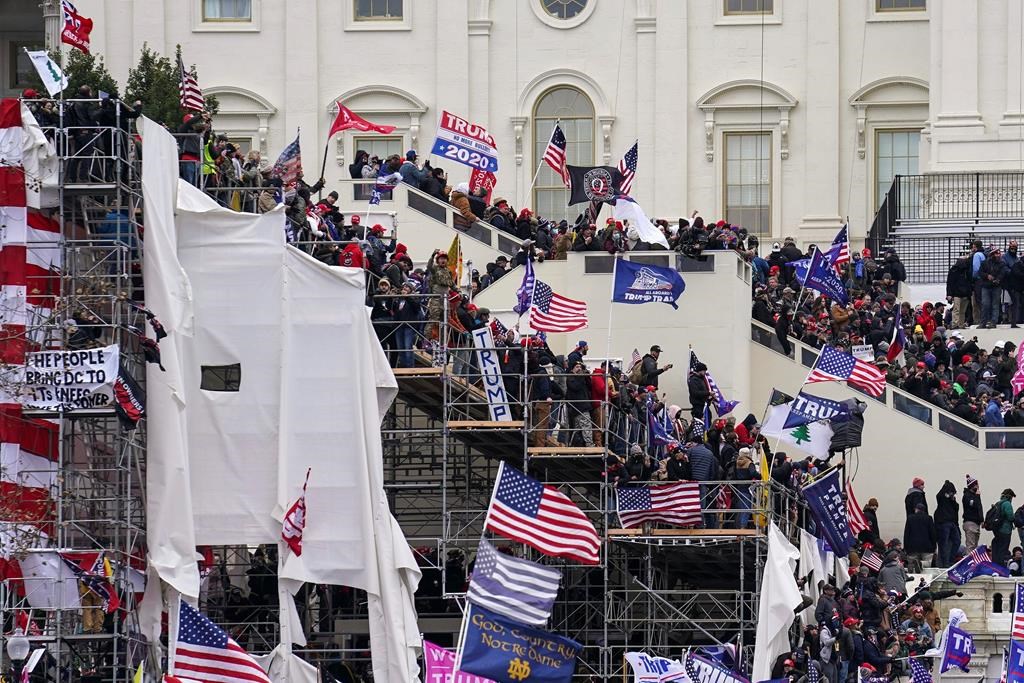
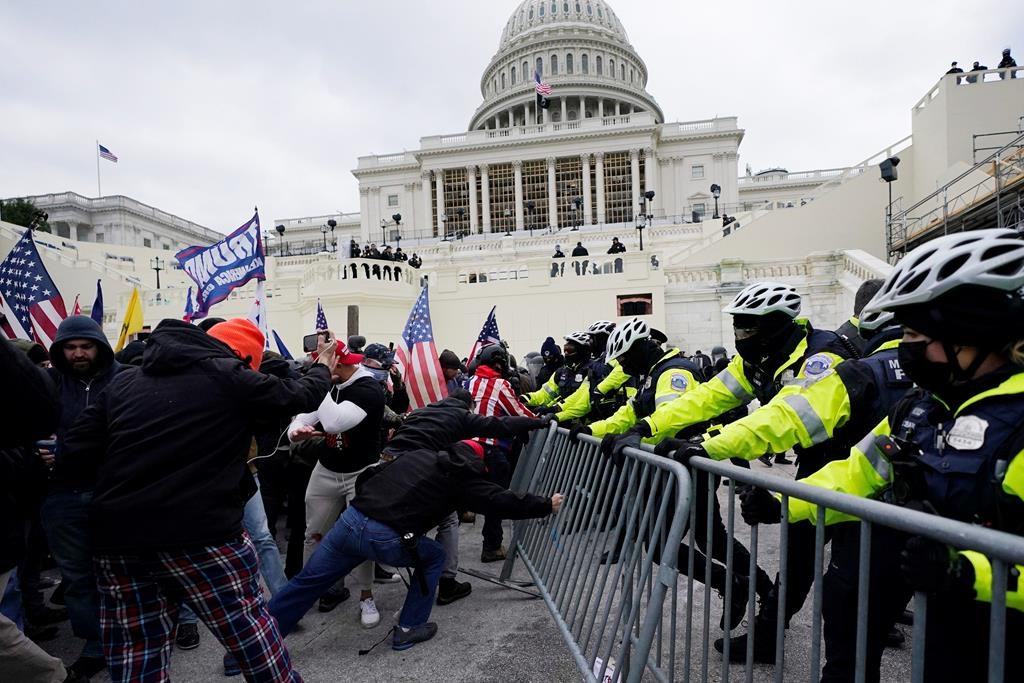
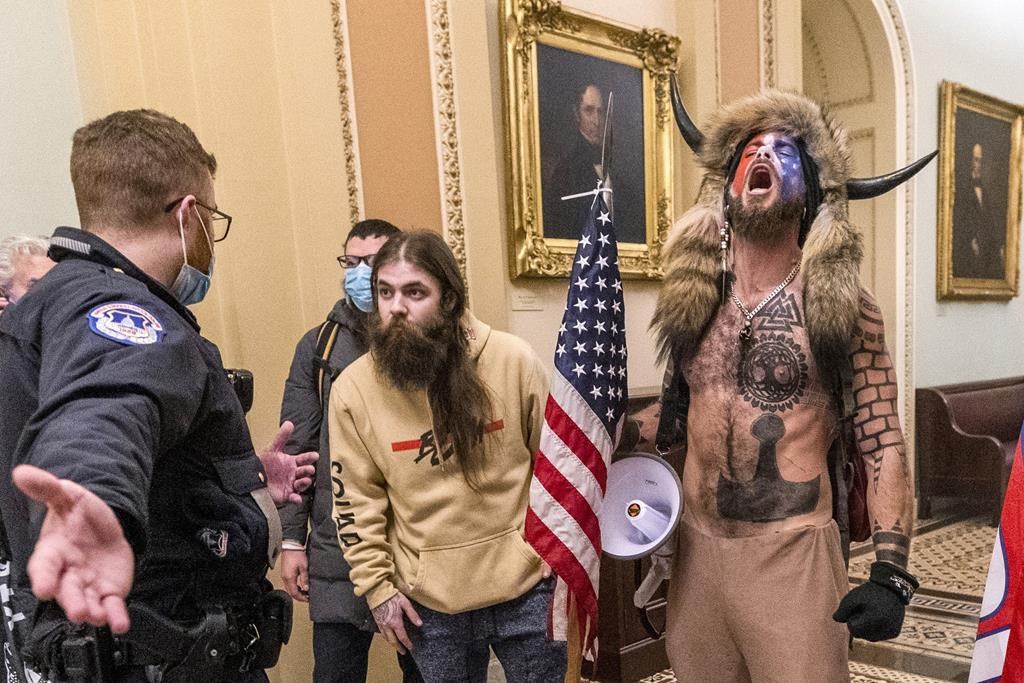
The crowds occupied the buildings for hours before finally clearing the halls. Five people died.
A month later, Congress impeached Trump on Incitement of insurrection charges but the Senate eventually acquitted him.
Related Articles:
- Media captures unprecedented storming of U.S. Capitol
- Closed US Capitol is somber backdrop this Independence Day
- After Canada’s Proud Boys decision, U.S. lawmakers debate response to Capitol riots
Hate crimes target Asian, Muslim communities
In March, a 21-year-old man was arrested after eight people at three Atlanta-area massage parlours were killed in a shooting spree. Six of the victims were of Asian descent.

FILE – In this March 17, 2021, file photo, after dropping off flowers Jesus Estrella, left, and Shelby stand in support of the Asian and Hispanic community outside Young’s Asian Massage in Acworth, Ga. The murder case against Robert Aaron Long, a white man accused of shooting and killing six women of Asian descent and two other people at Atlanta-area massage businesses, could become the first big test for Georgia’s new hate crimes law. (Curtis Compton /Atlanta Journal-Constitution via AP, File)
The attacks prompted former Vancouver mayor Gregor Robertson’s wife Eileen Park to go public about the kinds of attacks she suffered following her wedding.
Then in May, Vancouver was pegged by Bloomberg News as the Anti-Asian Hate Crime Capital of North America. “The backlash against the broader Asian community started almost as soon as the virus began spreading beyond China” – reads the piece.
On the other side of the country, London, Ontario is the backdrop of a crime that appears driven by hatred towards Muslims. Four members of the same family were killed when a truck jumped a curb and ran over them.
Related Articles:
- Spa shooting victims ID’d as Biden, Harris head to Atlanta
- ‘Avalanche of anti-Asian hate’ after Vogue feature on former Vancouver mayor’s wedding
- Global spotlight prompts calls for action in Vancouver to address anti-Asian hate crimes
- #ItStartedWithWords: Holocaust survivors use social media to fight anti-Semitism
- Report names Vancouver ‘anti-Asian hate crime capital of North America’
Dozens of coyote attacks in Stanley Park
Vancouver’s Stanley Park became somewhat dangerous in 2021 with aggressive coyotes attacking at least 45 people, including some children who required hospitalization.
What began as the odd attack every few weeks beginning in December of 2020, turned into a seemingly weekly occurrence by September.
People were reportedly feeding the animals intentionally, which led to them becoming more comfortable with humans and as a result the coyotes became more aggressive.
This led to the province euthanizing a handful of coyotes in a controversial cull in September.
The cull drew the ire of animal rights activists around the province. Celebrities like B.C.-born rocker Bryan Adams and singer Jann Arden even voiced their displeasure through social media.
Culling of coyotes in Stanley Park? Consider the knock on effect by removing a species from its natural habitat. Look what happened when they wiped out the wolves in Yellowstone. They had to rewild them back to balance the ecosystem. #banthecull #coyotes #StanleyPark #Vancouver
— Bryan Adams (@bryanadams) September 5, 2021
Just exactly WHO- is the INVASIVE SPECIES? Pretty sure it’s not the coyote. People will never learn that the cities we build out of concrete- aren’t good for anybody- including ourselves. #stopkillingeverything https://t.co/krLV6FG0LV
— Jann “stop live horse export” Arden (@jannarden) September 8, 2021
The Vancouver Park Board ended up adopting a bylaw in October that sees a fine of $500 for anyone caught feeding wildlife of any kind — including birds and squirrels. That built upon a provincial law that forbids the feeding of dangerous wildlife like bears and coyotes.
In November, Stanley Park’s coyote problem was officially declared over.
Coyote Update | Public safety for visitors to Stanley Park is our top priority.
Four coyotes in Stanley Park were euthanized by COs overnight and this morning.
One of the coyotes was captured in very close proximity to the site of the recent attack: https://t.co/IaRAH6x0sC pic.twitter.com/asUlj9aFFq— BC CO Service (@_BCCOS) July 15, 2021
Related Articles:
- Five-year-old boy attacked by coyote in Stanley Park
- ‘We failed’: Vigil held for Stanley Park coyotes amid cull
- Feeding wildlife in Vancouver parks could now cost you
- Activists, locals commend Vancouver Park Board move to fine people feeding animals
- Two arrested after allegedly feeding coyotes in Stanley Park
Triumphant year for women in sports
In 2021, Canada received notoriety for the accomplishments of its female athletes on the court, pitch, field, and in the pool.
The 19-year-old tennis phenom Leylah Annie Fernandez became a household name after her performance at the U.S. Open. She knocked off three of the top five players – including Naomi Osaka – on her way to the championship match.
After the Olympics were sidelined for a year due to COVID-19, the Canadian women showed resiliency and made history at the 2020 Tokyo Olympics.
Penny Oleksiak became the nation’s most decorated athlete of all-time adding three medals she earned in Tokyo to the four she won at Rio in 2016.
Softball was back in the Olympic program for the first time since 2008 and veteran pitcher Danielle Lawrie-Locke closed out Canada’s bronze medal game against Mexico 3-2, giving Canada its first medal in the sport.
.@SoftballCanada won the 1st medal for Canada in #Tokyo2020 & the 1st ever women’s Olympics softball medal.
Langley’s @daniellelawrie5 shares her mindset going into the bronze medal game against Mexico.
“I am not getting off a plane unless I have a medal around my neck.” https://t.co/DGJt11K13c
— Lindsey Horsting (@lindseyhorsting) August 7, 2021
The women’s soccer team won their first gold medal and it was the first time a Canadian women’s team won gold a the Summer Games. Through a drama-filled game against Sweden that went into extra time and penalty kicks, four-time Olympian and team captain Christine Sinclair says they were determined to change the colour of their medal after winning bronze in Rio and London in 2012.
After bringing home the gold, Team Canada women’s soccer captain @sincy12 is bringing awareness to MS. She joins OT on @Sportsnet650 to discuss the cause and growing women.https://t.co/FAp44P6Wc6 @CarolineFrolic, @lindseyhorsting, @Linaset pic.twitter.com/UZGdsvgJ9v
— CityNews 1130 Vancouver (Inactive) (@news1130) August 20, 2021
Farmers protest Indian agricultural laws, garner global support
It’s been more than a year since farmers across India set out for New Dehli, sparking massive protests against three controversial farming laws.
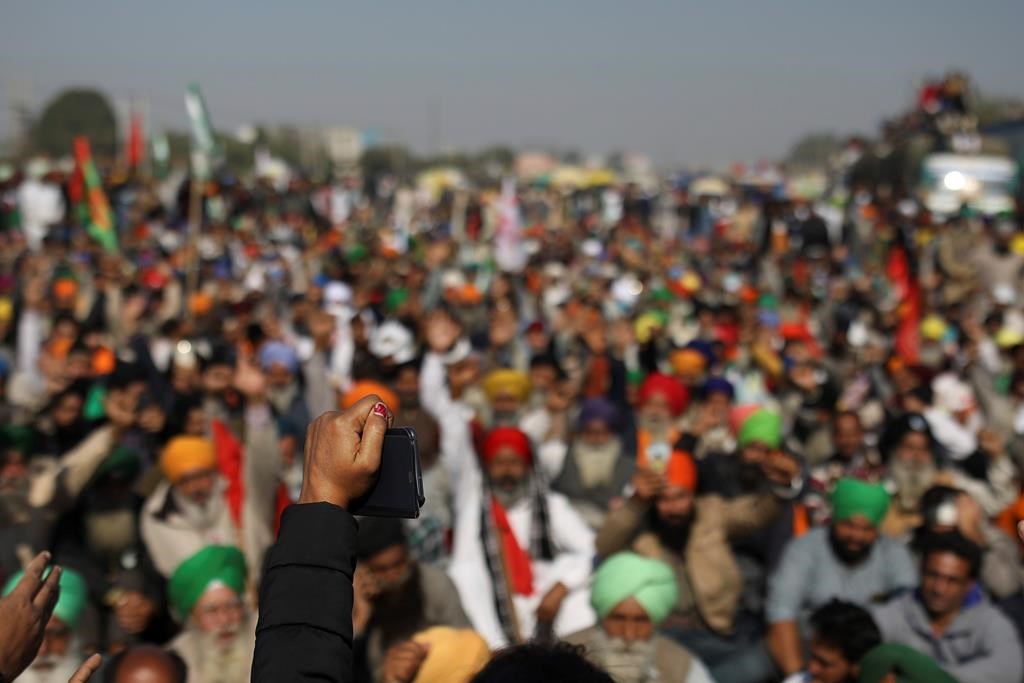


The contentious laws were described by the government and Prime Minister Narendra Modi as a way to modernize India’s agriculture industry.
But farmers said they would only benefit major corporations and leave the farmers — many of whom were dealing with poverty — with nothing.
Farmers mostly from the Grain Bowl states of Punjab, Haryana, and Uttar Pradesh, marched to New Dehli where they met violent police officers who deployed tear gas and water cannons.
Images shared online caught the world’s attention, depicting violence aimed at farmers — with celebrities like Rihanna and politicians speaking out.
Then in a rare and surprising move, Modi suddenly addressed the nation last month. He coincided with Gurpurab — a major Sikh religious holiday — announcing plans to repeal the three laws and offered an apology.
Nearly 700 farmers died from the severe weather and violent clashes with police.
Related Articles:
- Demonstrations in support of Indian farmers continue nation-wide
- Rally supporting Indian farmers at B.C. legislature gets Horgan’s attention
- Marginalized groups in Vancouver gather in support of Indian farmers
- RCMP shutdown of Surrey protest supporting Indian farmers unconstitutional: lawyer
B.C. heat dome brings record-breaking temperatures, has deadly consequences
The word ‘unprecedented’ gets thrown around a lot these days, but B.C.’s deadly heat dome really was.
“As far as we know, this is it, this is as hot as it’s ever been,” explained Meteorologist Michael Kuss in July. “And we go back 100, 120 years plus and we haven’t seen anything like it, especially a stretch that lasts this long.”
Some long-standing temperature records were smashed this summer and ultimately 595 deaths would be linked to the heat dome, making it the deadliest weather event in Canadian history.
Experts warn, weather like this so-called one-in-one-thousand-year event may soon be a part of life, as the effects of climate change become more apparent.
Related Articles:
- Wildfire report author says heat dome highlights need for new plans in wildfire fight
- Is the ‘heat dome’ in B.C. a sign of summers to come?
Village of Lytton almost completely destroyed by wildfire
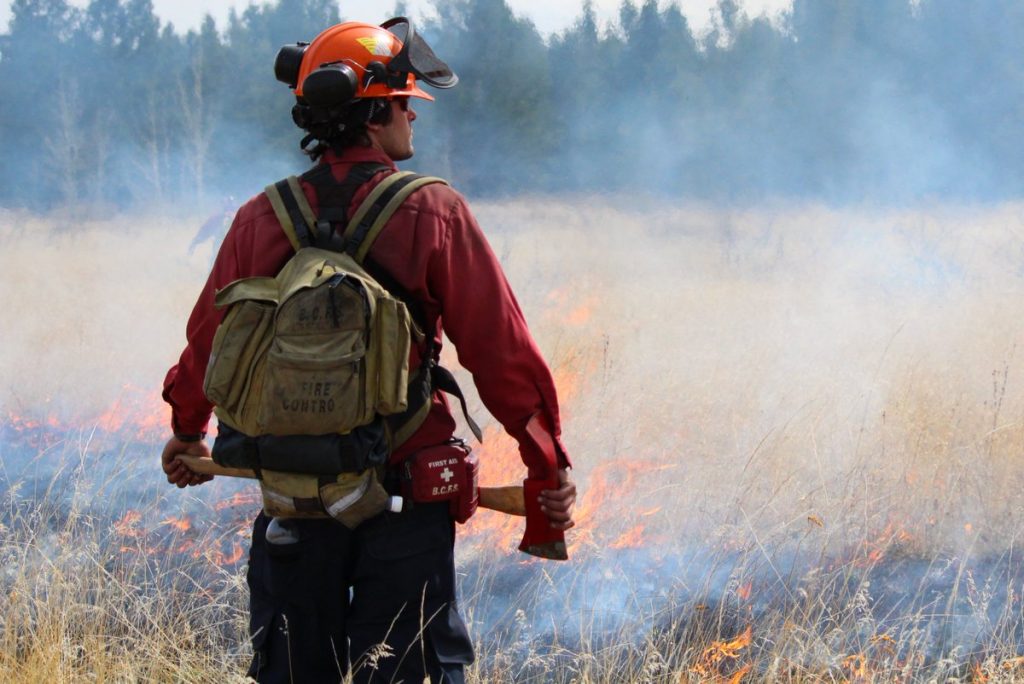
2021 saw one of the worst wildfire seasons on record for British Columbia with more than 1,600 wildfires burning nearly 900,000 hectares of land, including 90 per cent of the Village of Lytton.
The fire erupted without warning at the end of June in the midst of a heat wave that saw the village break the record for the hottest temperature ever set in Canada three days in a row with the thermometer hitting a blistering 49.6 Celsius.
Residents scrambled to evacuate the kilometre long village as flames quickly spread, many escaping whichever way they could with just the clothes on their back. The fire would leave two people dead, hundreds displaced, and the village looking like a war zone with charred debris where buildings and homes stood.


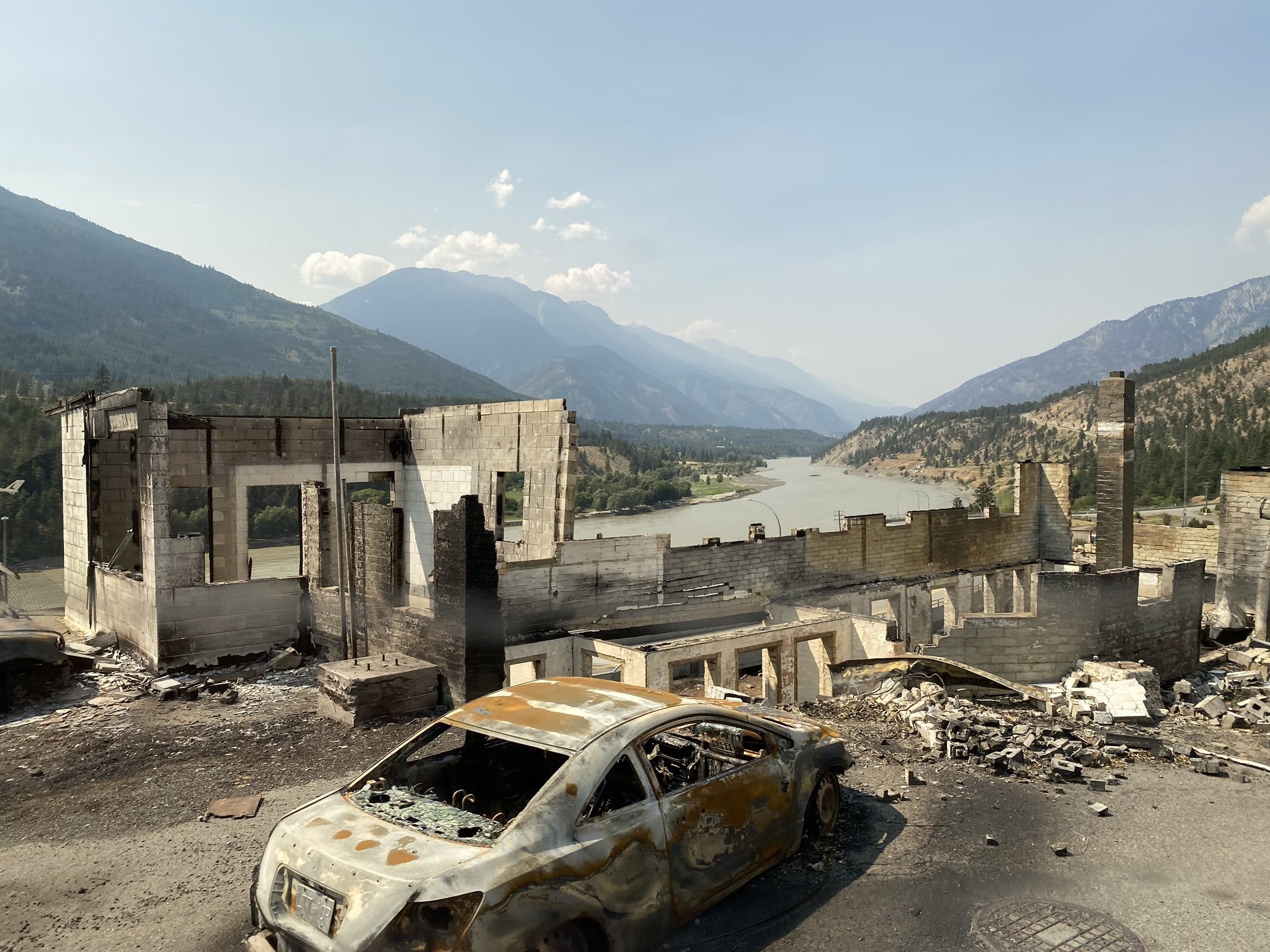
While there was rampant speculation a train sparked the flames, a Transportation Safety Board investigation would find no link between railway activities and the fire. Countless residents remain displaced, not sure when they’ll be able to return to the village as the slow clean-up and recovery continues.
Related Articles:
- ‘The situation is very, very dire’: 90 per cent of Lytton burned, says BC MP
- Lytton, B.C. is Canada’s face-to-face encounter with the future of climate
- No evidence trains caused Lytton wildfire: Transportation Safety Board
Historic flooding devastates B.C. communities
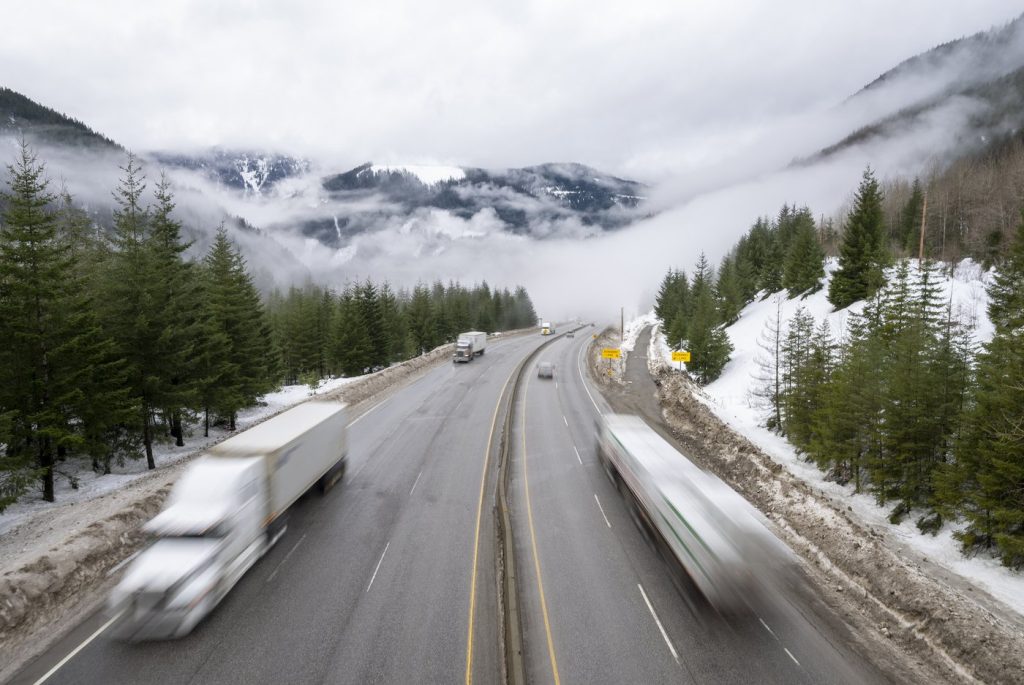
The catastrophic atmospheric river in B.C. this year caused devastating flooding, killed at least four people, and closed off the Lower Mainland from the rest of the country.
Between Nov. 14 and 16, flash flooding and landslides destroyed major highways and trapped hundreds in their cars as much of the province’s south coast was drenched with rain.
However, the flooding did prove the resiliency of British Columbians, with many opening their homes to evacuees and bringing food to truck drivers living out of parking lots.
When building back, the province has said they would be keeping in mind further climate events to prepare for the next storm.
Related Articles:
- B.C. declares state of emergency due to floods
- Metro Vancouver cut off from rest of B.C. due to major highway closures
- Cars, couches, propane and fuel tanks among debris from record flooding in B.C.
- ‘We hope you’re safe’: Surrey kindergarteners send cards to flood-ravaged community
Rollercoaster of COVID-19 restrictions in B.C.
The second wave of COVID-19 carried into 2021 leading to a circuit breaker with harsh restrictions announced at the end of March and lasted weeks.
This marked a major downturn for the hospitality and entertainment sectors as all indoor dining stopped, large events and gatherings were virtually non-existent and the Delta variant loomed.
But people started getting vaccinated in the spring and summer as the rollout moved in tandem with the restart plan — moving us to step three where we currently sit.
The vaccine passport system was brought in for almost all public gatherings and is set to stay in place past January of 2022.
With the surge of Omicron variant cases, the province brought in a host of new COVID-19 restrictions just days ahead of the holiday season.
Related Articles:
- COVID-19: B.C.’s restart plan is good but could face bumps, says expert
- B.C. to unveil restart plan as circuit breaker restrictions expire
- B.C. brings in sweeping new COVID-19 restrictions ahead of holidays