Urgent forestry summit called in B.C. as sector is hit hard by tariffs
Posted November 3, 2025 7:38 am.
Last Updated November 3, 2025 12:31 pm.
Politicians from both the provincial and federal governments are meeting in Vancouver Monday to figure out how to help the struggling forestry sector following yet another increase in tariffs by the U.S. president.
An additional 10 per cent levy was instated last month, on top of the 35 per cent tariff that was already in place on Canadian goods.
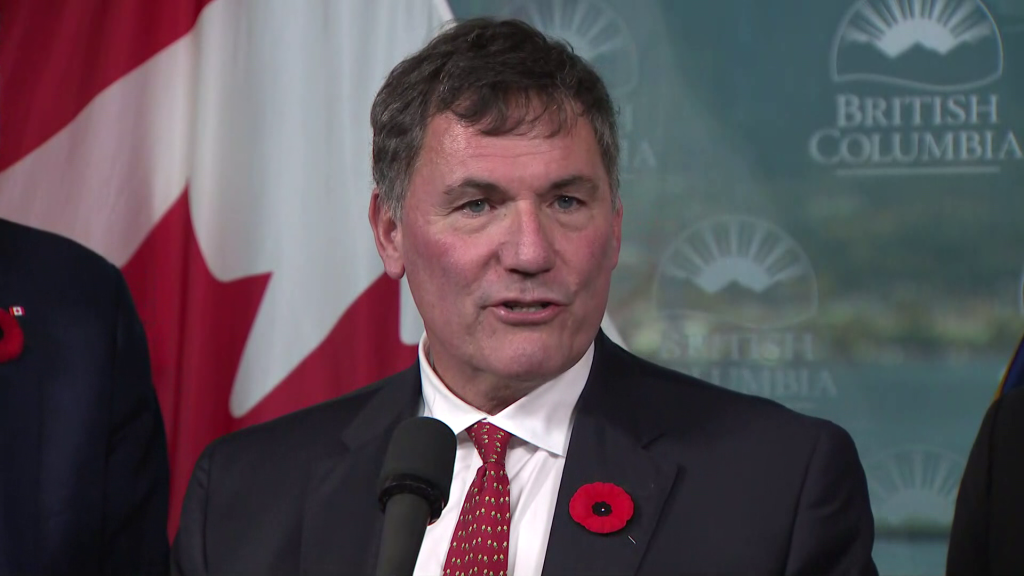
CLICK HERE TO LISTEN TO 1130 NEWSRADIO VANCOUVER LIVE!Federal politicians attending the meeting include Dominic LeBlanc, the minister responsible for Canada-U.S. trade, and Housing Minister Gregor Robertson, who previously served as Vancouver’s mayor. B.C. Premier David Eby and his forests and jobs ministers will also be there.
At a news conference about softwood lumber last month, Scott Lunny, director of United Steelworkers District 3, which represents more than 10,000 unionized millworkers and loggers, was upset with the tariffs.
“They are worried, concerned, frustrated, angry and really feeling like nobody has their back in this situation,” said Lunny.
He says the lumber industry keeps communities humming along and paycheques in people’s bank accounts.
“Forest-sector jobs are often anchor jobs in British Columbia communities, and when those jobs are lost, it’s not just the immediate worker, it’s their family that are impacted. It’s the truckers, the retail stores, the other public sector workers in the community, and when that happens, we hollow out those communities.”
Lunny was among the chorus of voices calling on the federal government to prop up the industry.
“We need to stick together, and we need to do whatever the hell we can to make sure that we fight for forest workers, forest communities, so we don’t lose any jobs, don’t lose any manufacturing capacity, don’t lose any businesses throughout this crisis we have with the U.S. tariffs.”
“There is no time to wait. Jobs and mills are on the line.”
Eby, who has never minced words when talking about U.S. President Donald Trump, called the most recent uptick in tariffs an attack on workers, communities and the lumber industry, not just in B.C., but across Canada.
“The contributions of the forests sector to the Canadian economy are massive,” Eby said last month. “It provides a greater, direct contribution to Canada’s GDP than auto parts and steel. It provides more direct employment across the country than either of those sectors. It’s an existential threat.”
Lumber from B.C. has been used to build all kinds of structures, including homes, in the U.S., and Eby was visibly angry and stunned that this is how the province is treated in return.
“We are calling on Ottawa to stand with us… to ensure they’re deploying the more than $1 billion they’ve committed to the forests sector with urgency. There is no time to wait. Jobs and mills are on the line.”
Eby is pushing the feds to treat the lumber tariffs like “the emergency to the national economy that it truly is.”
In an open letter dated Oct. 10, 2025, Eby urged Prime Minister Mark Carney to take action, saying the industry was at a breaking point.
It read in part, “We must have the programs in place to support workers and their families in the event of curtailments, layoffs and permanent closures in the days, weeks and months ahead. In the face of these attacks on the Canadian economy, the federal government should prepare emergency supports for impacted workers and contractors. As an initial step this should include enhanced EI benefits for these workers.”
Adding, “British Columbia is the second largest exporter of softwood lumber in the world — second only to Russia. Yet today, Canadian lumber faces higher tariffs and duties than Russian lumber. That reality is indefensible.”
B.C. Forests Minister Ravi Parmar echoed Eby’s comments that Canada must diversify where it sends its softwood lumber to ensure no B.C. jobs are lost.
“We’re going to fight like hell for their paycheques. We’re going to work together as an industry, as a sector, as government, as First Nations to be able to send a message to Ottawa that we need them to stand up with us for our forests sector,” said Parmar.
The fight over softwood lumber has been a long-standing friction point for decades between the two countries, with the United States imposing duties, alleging that Canada subsidizes its industry.
The B.C. Council of Forest Industries issued a statement last month on behalf of businesses, unions and other industry groups, saying the government must bring the same urgency to the lumber file as it has to disputes with the U.S. over steel, aluminum and energy.
—With files from The Canadian Press