Number of overpass strikes in B.C. drops year over year
Posted December 3, 2025 7:14 am.
Last Updated December 3, 2025 7:15 am.
It was a story that created a lot of headlines in 2024, but things are different this year.
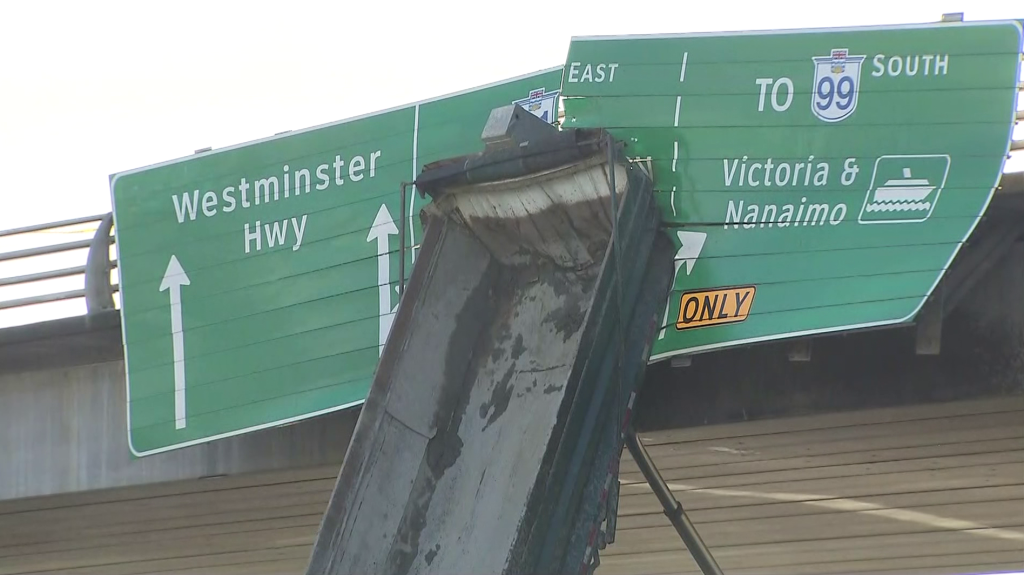
According to provincial statistics, the number of overpass strikes in B.C. has gone down this year. There were 29 strikes last year, with at least one recorded every single month, but so far this year, there have only been 16.
CLICK HERE TO LISTEN TO 1130 NEWSRADIO VANCOUVER LIVE!Dave Earle, president and CEO of the BC Trucking Association, tells 1130 NewsRadio he’s happy the numbers are down, but says it’s still not good enough.
“There is simply no excuse to have it happen,” said Earle.
“We think what we’re really seeing is not just the changes to the legislation but the message that it sends, and all the messaging around the issue. It became such a hot-button, above-the-fold issue that everyone was aware, and it created a lot more awareness. People are actually paying attention to the issue now, not enough, but we’re getting better.”
He credits the drop in numbers to a few factors.
“First off, when you look at the actual drivers themselves, there is a degree of awareness that wasn’t there before. It should have been, but it just wasn’t. We’re seeing more from dispatch. We’re seeing more from the carriers, and I am ever-hopeful that we’re beginning to see more from the shippers as well, trying to recognize to use reputable companies that know what they’re doing to move your oversized goods.”
When asked if members of the industry responded with fear to tougher penalties introduced by B.C. Transportation Minister Rob Fleming, Earle says no.
“There was joy. It was looking at it and saying, ‘We have to get these companies that just don’t care out of the industry. We have to get people who don’t want to do it properly out of the industry.'”
Early says discussions about regulations with the provincial government continue.
“We still have proposals in front of government to tighten this up even more, because we simply don’t want these operators that aren’t doing what they need to do in the industry,” he adds.
“The next thing… is to go to the shipper. And go to the people who are actually hiring these companies and saying, ‘What are you doing to ensure they’re working safely?’ They don’t have to do the work, but we don’t think it’s inappropriate to make sure that the shipper is held accountable to make sure that the load has been measured.”
He expects newer rules to be rolled out sometime early next year.
“What we’re trying to do is find ways, using the tools that we have right now, so we don’t have to go back in and look for legislative amendments. We’re trying to find ways that aren’t just to go out there and beat the driver over the head, but that are really creating structures and emphasis to make sure they understand how important this issue is and just make it simply part of their everyday business to know what they’re moving.”
“The next step in our mind is to climb that ladder and go to the shipper and say, ‘You’re accountable as well.'”
Earle reiterates that no matter how much a company or driver follows the rules, mistakes will still happen.
“People do the right thing. They pull the permit, they get the route, and they miss a turn. And unfortunately, that can happen and, that’s a lot different than somebody not bothering to pull a permit, not bothering to measure their load, and just heading off down the highway.”
He admits that sentiment may not sit well with the general public, which often gets caught in several hours of delays and road closures around overpass strikes — not to mention the cost of repairs.
“We keep doing what we’re doing, and the next step in our mind is to climb that ladder and go to the shipper and say, ‘You’re accountable as well.’ When these loads move — before they move — the driver should know exactly how big it is. There’s no reason for that not to be done. So, while we put all the emphasis on the front-end of that process, we also believe we need to put lots of emphasis on the back end. Looking at the cargo owner, the shipper, and saying, ‘Did you make sure it got measured? Who did you hire? How did you go through that process?'”
Earle suggests that if shippers are held responsible, they will also be part of the penalty chain in the event of an incident.
He hopes the number of overpass strikes is driven down to zero in 2026.
Stricter provincial rules under B.C.’s Commercial Transport Act (CTA), introduced last year, included a $100,000 fine and up to 18 months in jail for drivers found responsible.