What’s changed for the Liberals one year after Trudeau resigned?
Posted January 6, 2026 7:45 am.
Last Updated January 6, 2026 7:49 am.
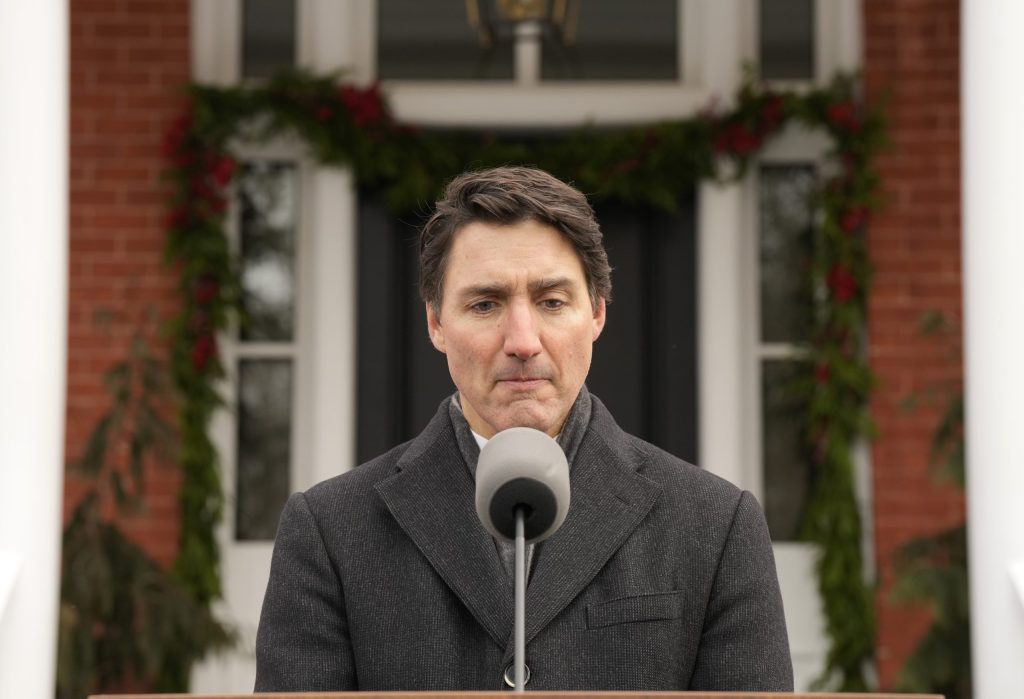
It’s been exactly one year since former Prime Minister Justin Trudeau resigned, shaking up the leadership of his party and the country.
The decision came after weeks of infighting, an unsteady caucus and a bombshell, when former Deputy Prime Minister Chrystia Freeland released a public statement questioning his leadership. Weeks later, Trudeau told the country he was done.
CLICK HERE TO LISTEN TO 1130 NEWSRADIO VANCOUVER LIVE!“I intend to resign as party leader, as prime minister after the party selects its next leader through a robust nation-wide competitive process,” he told the country on Jan. 6, 2025. “I advised the governor general that we need a new session of Parliament. She has granted this request, and the House will now be prorogued until March 24.”
Within a couple of months, the party held a leadership vote, with former Bank of Canada Governor Mark Carney winning in a landslide. He secured more than 85 per cent of the vote. Freeland finished way behind, in second, with just eight per cent of votes.
“A year ago, we were writing the Liberals’ obituary,” explains 1130 NewsRadio’s Parliament Hill Reporter Cormac Mac Sweeney. “They were down something like 15 per cent support below the NDP. They were going to be creamed in the next federal election by all accounts, and then Justin Trudeau’s decision to step aside changed everything for the Liberals.”
He explains that the turnaround is hard to compare to much else in the history of Canadian politics.
“I still remember election night, and I stopped some Liberal staffers, and I said, ‘How are you feeling? You didn’t get that majority.’ And they laughed and said, ‘Look, a few months ago we thought we were all going to lose our jobs, so just getting back into government is a big win for us in our eyes.’ That really tells you the story about how Liberals were astonished even themselves.”
After luring MPs away from the federal Conservative Party, the Liberals are now just one seat from a majority. But Mac Sweeney says defections aren’t new.
“Justin Trudeau was able to get to power by leaning heavily to the left and grabbing a lot of NDP supporters. The Mark Carney Liberals are different in the fact they seem to be leaning more right or centre-right… and that’s now attracting some Conservatives. We’ve seen some Conservatives who are maybe a little bit business-minded or feel their constituents may prefer them in a Liberal role, given what Mark Carney has been preaching and some of the actions he’s taken that really mirror a lot of what we’ve heard from the Conservatives over the last year or so.”
Mac Sweeney says there’s a chance that another MP could switch parties, which may be difficult to swallow for some Conservatives as Leader Pierre Poilievre faces a leadership review at the end of this month in Calgary.
“It serves Liberal advantage to try and raise more questions about his leadership when there have already been questions about that leadership following the election loss and then the loss of at least two, and potentially a third, MP.”
Despite seemingly growing his party, not every province has been happy with Carney, including B.C.
“There seem to be some issues from the left side of the Liberal Party, particularly with British Columbia. There have been a lot of complaints in regard to the way he handled this pipeline proposal and the lack of consultation. There’s been a lot of criticism from Indigenous communities across the country as the government tries to push through some major projects to try and cushion the economy from the economic threat from the U.S.”
Mac Sweeney also credits some of the party’s makeover to U.S. President Donald Trump and his relentless threats to annex Canada or invade the country, making it the “51st state.”
But he points out that there are many domestic issues that need Carney’s full focus.
“Following through on those major housing initiatives. Clean water is another priority — and Indigenous communities are pushing them to follow through on that — and there are those regular day-to-day issues that Canadians face around jobs, the economy, crime.”
He adds that Carney must also address health care and public safety.
What’s next for Carney and company is a review of the Canada-United States-Mexico Agreement (CUSMA). Negotiations are expected to be intense, and Trump has previously threatened to walk away from the trade pact if he doesn’t get the concessions he’s demanding.